BACK TO RESEARCH WITH IMPACT: FNR HIGHLIGHTS
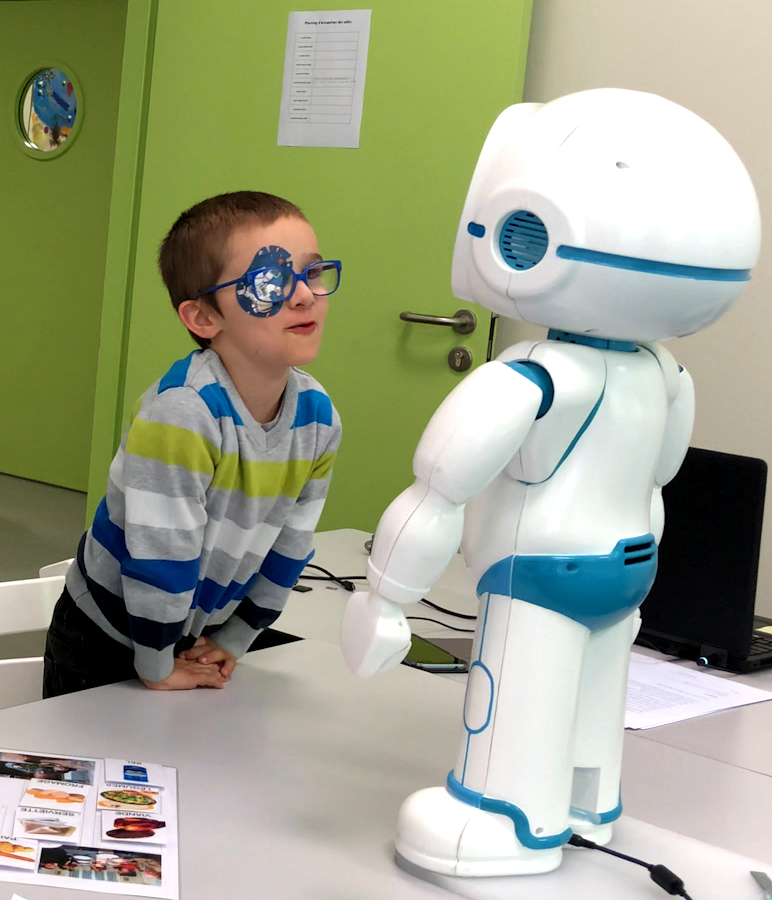
QTRobot, the robot developed by Luxembourg spin-off company LuxAI, is now being brought to families in the UK as part of a social robot–led early development programme at home for young autistic children. Supported by FNR since its inception, the little robot is a prime example of how FNR enables research-driven innovation. We take a look back at the 15 years the FNR has supported this innovation – all the way back to the AFR PhD of LuxAI CEO Pouyan Ziafati.
Fittingly for Luxembourg, where an interdisciplinary approach to science is a matter of course, it was partly thanks to the different backgrounds of Dr Pouyan Ziafati – a computer scientist specialised in AI – and his wife Dr Aida Nazarikhorram – a medical doctor – that the idea of creating the robot QTRobot came to be.
PhD laid the groundwork
It all kicked off in 2010, when Pouyan Ziafati secured an AFR grant from the FNR for his PhD titled “ProCrob: Programming Cognitive Robots”. The research was supervised by Prof Dr Leon van der Torre, Full Professor in Artificial Intelligence at the University of Luxembourg and laid important groundwork for what later blossomed into the company LuxAI.
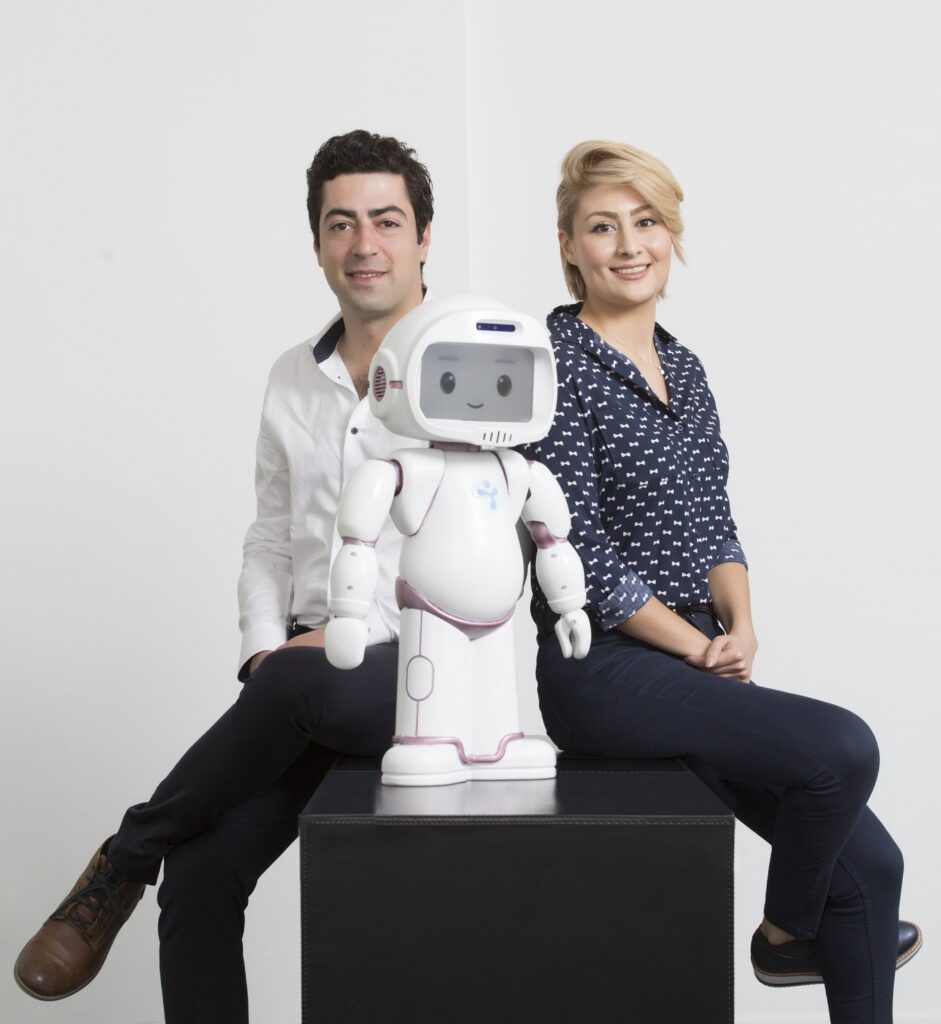
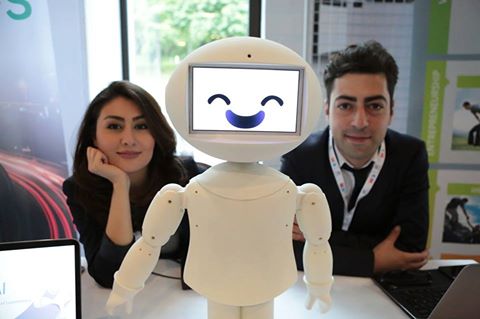
In an FNR interview from 2021, the duo stated:
“Being a couple with two different backgrounds, one in AI and robotics and one in medicine, it was always interesting for us to learn more about each other’s domains. The discussions opened the door to find out that there are many areas in healthcare in which using AI and Robotics can be a game changer.” Aida Nazarikhorram says.
“At first, it was just an interesting topic of discussion, but gradually it became clear that developing an interdisciplinary venture would be very appealing for both of us. After doing early market research for a variety of health-related AI applications, we came up with the idea of a robot so easy to use that it can be used by every healthcare professional, starting from the domain of autism, which was the one most in need for an urgent solution,” Pouyan Ziafati adds.
Already during the PhD it became clear the goal was to translate this research into a real-world application. In the final report of his AFR PhD, in the section about future career plans, Ziafati stated: “I plan to start a spin-off from University of Luxembourg to commercialize the work I have developed during the PhD. The vision is to create a company specialized in developing autonomous assistive robots.”
Securing proof of concept funding
Jumping forward to 2015, Ziafati secured a grant from the FNR’s JUMP programme.
“In this project, we use our software framework to build a social robot as a proof-of-concept. In order to enter the market, with the support of the FNR PoC grant, we will develop the Cuddie robot as commercial demonstrator to showcase our technology. Cuddie will be an affordable semi-autonomous robot made by design for autistic children and their supervisors”, Ziafati wrote in the funding application.
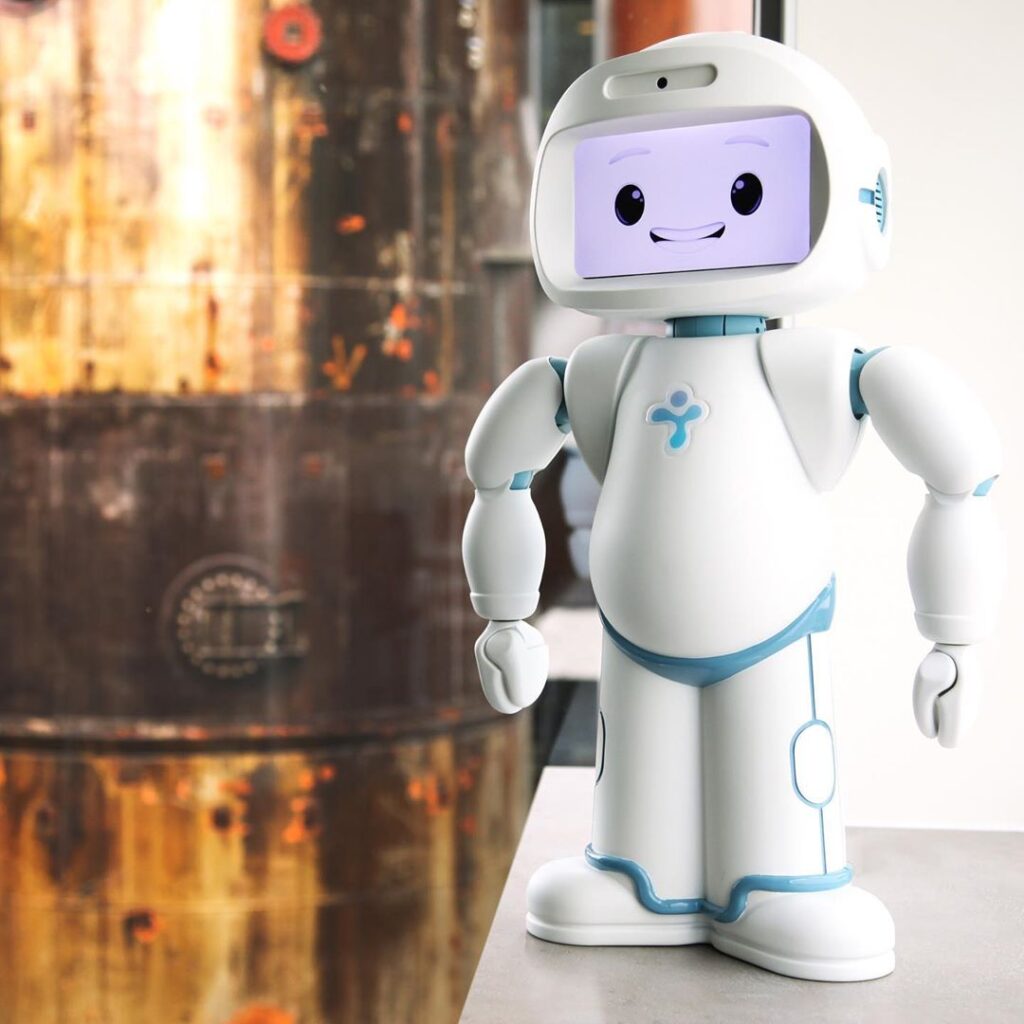
The support from the FNR’s JUMP programme, which enables the translation of research results into market applications, played a significant part in the creation of the spin-off company LuxAI and their social robot which has since taken on the name QTRobot. It delivers interactive learning activities through engaging games and guided exercises, adapting to each child’s pace while providing families with structured support tools they can use at home.


LuxAI was officially launched in 2016, with Pouyan Ziafati as CEO and Aida Nazarikhorram as COO. Within months of launching their company, they won awards such as the first prize at Mind&Market, the best healthcare facility award. Then came more than 10 international prestigious awards, including the top 10 best ideas from Europe by EU commission, one of the Best social innovations by European investment bank and winning the award of the Tech for a better world from CES 2019. In 2017, LuxAI was recognised with an FNR Award for Outstanding Research Driven Innovation.
Developing with the user
A rule LuxAI set from the beginning was to ‘develop with the user’. The prototype developed with support from the FNR’s JUMP programme, was immediately put in use in a pilot project in autism centers, as well as autism research projects in Luxembourg.
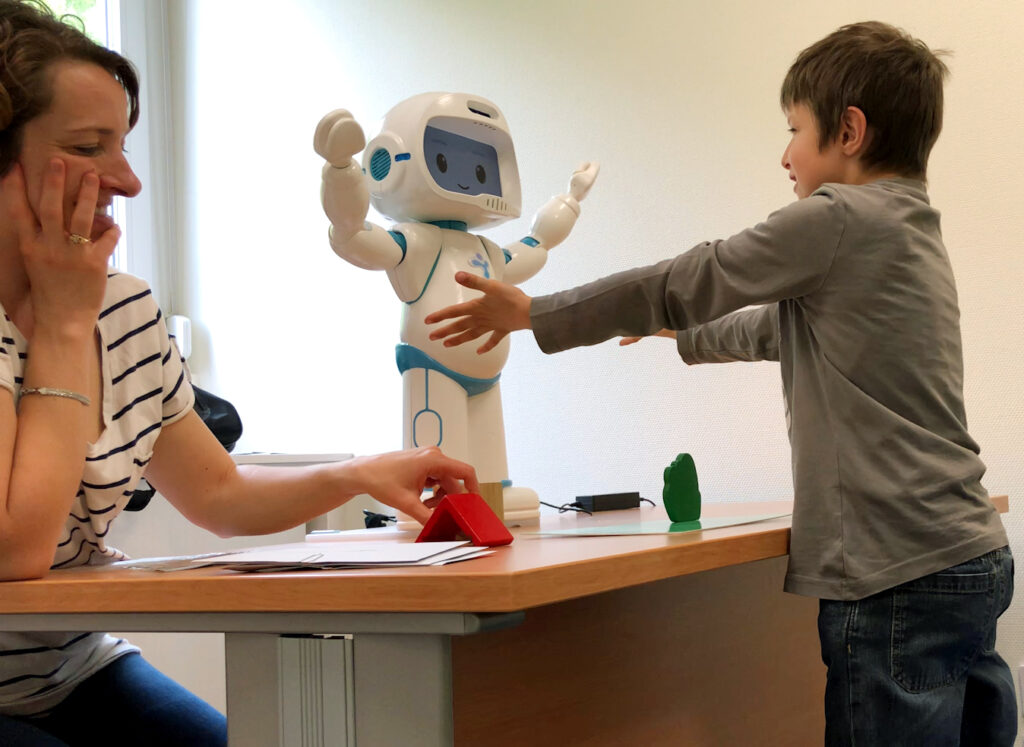
Researchers at the University who used the robot with children, such as Dr Andreia Pinto Costa, observed that children with autism look at the robot longer than they look at a person, suggesting the children are more comfortable with the interaction with the robot than with a person.
The researchers explain that autistic children often suffer because they do not get specialised support for their learning – a missing element the robot can fill. The robot is not intended to replace human delivered support, but to improve and customise it.
2025: QTrobot enters world’s first large-scale, longitudinal scientific study
Fast forward 10 years to December 2025: LuxAI, together with the Luxembourg Institute of Health (LIH) and the University of Birmingham (UK), launch the world’s first large-scale, longitudinal scientific study exploring the use of a social robot–led early development programme at home for young autistic children, delivered through QTrobot. The study will involve 69 families and is expected to conclude by the end of 2026.
The study is funded jointly by the FNR and the Luxembourg Ministry of the Economy, and has the goal of evaluating QTrobot, LuxAI’s humanoid social robot, as a tool to support autistic children aged 2.5–4.5 years in key developmental areas such as communication and language, social skills and learning.
Major milestone in early-years support for autistic children
This new international collaboration is a major milestone in early-years support for autistic children and digital health innovation, and will evaluate how socially assistive robots can enhance the accessibility and quality of early developmental support for both children and their parents.
“This is a landmark study for both early autism research and technology-supported learning,” said Dr Manon Gantenbein, Head of the Clinical and Epidemiological Investigation Center at LIH. “So far, technologies like robots have shown very promising results in short-term, small-scale studies, but their long-term effectiveness and usability have never been systematically examined. For the first time, we are conducting a large-scale, long-term study to rigorously assess the impact of a robot-led programme designed to empower both children and their families through home-based support.”
The study will involve families in the UK participate over a 10-month period. During this time, researchers will assess child development and parental self-efficacy to understand how robot-assisted programmes can strengthen early developmental outcomes.
All photos by LuxAI | https://luxai.com/
Related highlights
25 examples of research with impact: A solid foundation for artificial intelligence
As the FNR marks 25 years since its creation, we highlight 25 examples of FNR-supported research with impact. Artificial intelligence…
Read more
From lab to startup: LuxAI and QTrobot – a robot to help children with autism
Luxembourg start-up LuxAI, with their socially assistive robot QTrobot, has been making waves on an international level since it was…
Read more