LATEST FNR HIGHLIGHTS
Use the keywords to view only highlights in a specific category
You can also view pages collecting all articles in our campaigns Spotlight on Young Researchers and FNR ATTRACT Fellows – the people behind the science
- All
- For & About Society
- Innovation & Partnerships
- Opinion
- Research Leaders
- Young Researchers
December 7, 2020
Thin-film technology is used in many different applications. A Luxembourg research team has now developed a method for functionalising surfaces using plasma instead of liquids.
December 3, 2020
A mathematician develops new algorithms that allow the analysis of encrypted data without ever having to decipher it—a crucial point to ensure their confidentiality.
November 26, 2020
Anja Leist wants to find out how to resist the decline of our cognitive abilities in old age. Her international research has already achieved a first result: improving education helps prevent problems occurring decades later.
November 19, 2020
Politicians and voters in the countries of Ex-Yugoslavia are still referring to conflicts which happened two decades ago. A political scientist wants to understand why and how to let go of the past.
November 12, 2020
A chemist wants to use solar energy to produce hydrogen from water. His idea? To draw inspiration from the molecules that allow plants to grow and animals to breathe.
November 11, 2020
PEARL grantee Prof. Conchita D’Ambrosio has developed new methods to paint a detailed picture of social inequality.
November 9, 2020
While machine learning and deep learning have come a long way, they are not yet at a stage where autonomous vehicles can handle unexpected situations. As part of a public research-industry collaboration, early career researcher Steve Dias Da Cruz investigates possibilities to reduce the amount of data needed to train reliable deep learning models for safety critical applications in the automotive industry.
November 5, 2020
A physicist has developed a new theory of thermodynamics to describe the microscopic world. It explains the astonishing efficiency of biological motors in our cells, improves the efficiency of chemical reactions and reveals the concrete role played by this abstract concept: information.
November 2, 2020
Studying the dynamics of microbial communities over several microbial generations, a team of Luxembourg researchers have gained insight into the microorganisms that live in biological wastewater treatment plants. This knowledge can ultimately help predict and control microbial communities – including the human microbiome.
November 2, 2020
If you want to reduce gender stereotypes in society, you must first make people aware of them. LISER researcher Carole Blond-Hanten has visited children’s and youth institutions to do this. In her luggage: a nine square metre board game.
October 29, 2020
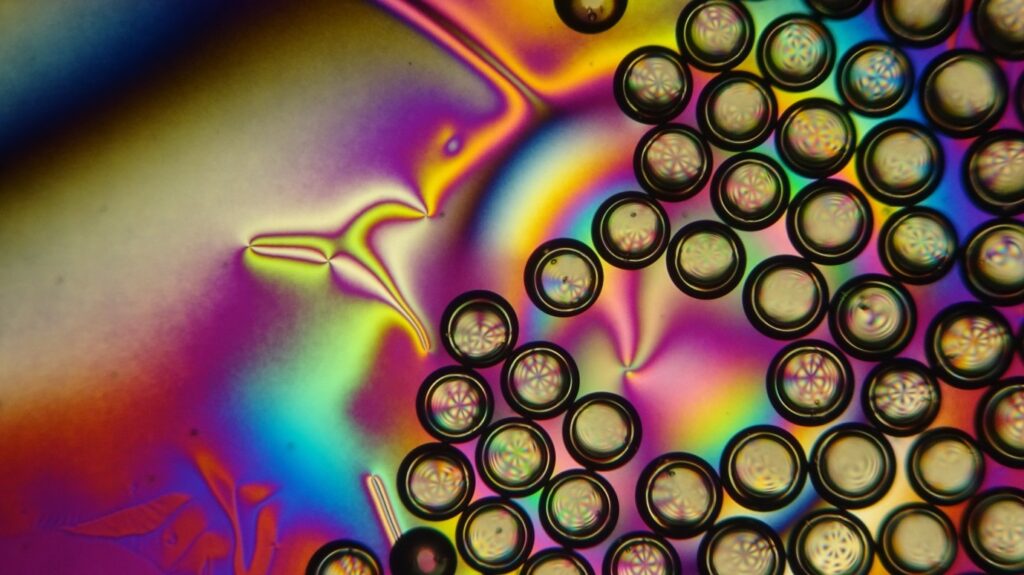
A physicist invented a new method to authenticate objects by using the strange properties of liquid crystals. He also spun them into smart elastic bands for applications in soft robotics and wearable technologies.
October 26, 2020
Over the past two decades, Luxembourg has developed into an internationally recognised hub for science. An important driving force behind this development is Parkinson’s research. The Grand Duchy is now one of the leading locations for this field of research. This can be attributed in part to the FNR-sponsored project NCER-PD, the National Centre for Excellence in Research on Parkinson’s Disease. NCER-PD is so successful that, in 2019, the FNR gave the green light and six million euros for the second funding period.
October 22, 2020
Physicist Daniele Brida develops ultrafast lasers to follow in slow-motion chemical reactions and the inner working of electronic devices. This new kind of microscope allows the observation of phenomena at the nanoscale that were until now just too fast to be seen – improving photovoltaics and electronics devices.
October 19, 2020
“The Natural State” is the official nickname of the state of Arkansas in the South Central United States. Fittingly, the Luxembourg Institute of Science and Technology (LIST) and the University of Arkansas have been collaborating since 2015 to make improvements to the “natural state” of various electronic components. An INTER Mobility project is involved.
October 15, 2020
Chemical compounds can have several stable forms – with dramatic consequences. A physicist at the University of Luxembourg can predict when this can occur: he has develop methods to precisely calculate the stability of molecules. These tools are now used by hundreds of scientists worldwide. They could also help understand why the new coronavirus is so contagious.
October 13, 2020
In industry, computer simulations and optimizations are established approaches to inform and improve engineering designs. As part of his Industrial Fellowship, Postdoc Martin Řehoř works on numerical solvers that could help solve design problems that involve the processing of fluids.
October 8, 2020
Countless microorganisms live peacefully in our body, but they also can be involved in many diseases. To find out exactly what role they play, a biologist has given himself a Herculean task: survey all the biomolecules produced by the microbes residing in our guts.
October 5, 2020
It is Nobel Prize season. The 2020 Nobel Prize in Physiology and Medicine has been awarded to three scientists who discovered that the majority of blood-borne liver inflammations (hepatitis) are caused by the Hepatitis C virus. Their work made possible blood tests and new medicines that have saved millions of lives. Interview with two scientists, who – either in the past or present – worked on Hepatitis C in Luxembourg or in collaboration with Luxembourg. One of them even did his doctoral thesis in the laboratory of Charles Rice, one of this year’s Nobel laureates.
October 1, 2020
Machine learning algorithms seem all-powerful, but still function passively: they merely analyse the data they are fed with. Björn Ottersten makes them smarter by letting them actively probe their environment. His work aims to improve sensors of self-driving cars, sharing of mobile bandwidth and Internet traffic.
September 16, 2020
Together with an international team of scientists, Luxembourg researchers led by FNR PEARL Chair Prof. Rejko Krüger, have clarified the cause for certain genetic forms of Parkinson’s disease. The seven-year interdisciplinary research effort also identified potential pharmacological treatments.
September 10, 2020
The Fulbright Program gives young researchers the opportunity to embark on an international research stay. Chemistry researcher Jean Haler spent one year as a postdoc at the Florida International University. We speak to the Luxembourg national about how the experience broadened his horizon and why he highly recommends other young researchers to benefit from the opportunities a Fulbright exchange offers.
September 7, 2020
While we frequently hear about new trends in mobile and wireless technologies, challenges remain, such as the need to charge devices on a stationary device. At the SnT at the University of Luxembourg, Postdoc Sumit Gautam works on solving the future information and energy requirements of wireless devices, via radio frequency (RF)-based techniques.
August 12, 2020
The FNR’s new communication campaign LetzSCIENCE is the first campaign in Luxembourg to blend traditional ‘postering’ with AR technology. Striking science images intrigue passers-by, who by scanning a QR code can discover a real-time 3D model overlaid on top of the image. People get to play around with a new, interactive technology and learn about research in Luxembourg in the process. We speak to Matthieu Bracchetti from Virtual Rangers, the start-up that created the AR experiences for letzSCIENCE, about the challenges in the creation process, and how Luxembourg is AR-ready.
July 23, 2020
Luxembourg is one of many countries experiencing the arrival of asylum seekers and refugees that have been displaced for reasons such as conflicts or instability in their own country. Managing a research team for the first time, CORE Junior PI Lucas Oesch leads the project ‘REFUGOV’ at the University of Luxembourg, which looks at the accommodation of asylum seekers and refugees in cities and camps.
July 16, 2020
Researchers at the Luxembourg Institute of Health (LIH) are developing a novel molecule that binds to and blocks a previously unknown opioid receptor in the brain – holding great promise for the design of alternative therapeutic strategies.
July 9, 2020
At KU Leuven, Luxembourg national Jill Kries is part of a research team driven by understanding how cognition and brain structure develop over time in language-related disorders and how this knowledge can be applied in a clinical or educational setting. We take a closer look at the work of the young team.
July 2, 2020
Anupam Sengupta went from being an engineer in India to studying physics in Germany, before diving into biology in the US and Switzerland. Combining his expertise in these fields, the Indian national came to Luxembourg in 2018 with an FNR ATTRACT Fellowship to set up his research group at the University of Luxembourg as a tenure track Professor in Physics. We speak to the biophysicist about his journey and passion for uncovering the secrets of how the smallest of living organisms regulate our health and happiness, and get impacted by the changes in their environment.
June 26, 2020
While solar panels appear on more and more rooftops, researchers are still developing ways to boost their efficiency. As part of her PhD at the Luxembourg Institute of Science and Technology (LIST), Indian national Hameeda Jagalur Basheer is developing alternative materials that can help capture the sunlight better and improve efficiency of solar panels.
June 18, 2020
Floods across the world have resulted in tremendous economic damage and loss of lives: better tools to predict flood rise and recession are needed. The biggest question facing researchers like Mohammad Zare is how to accurately simulate and predict this complex phenomenon. As part of an Industrial Fellowship between the University of Luxembourg and company RSS-Hydro, the Postdoc Works on improving the simulation and prediction of flash floods, with the goal to develop a decision-making model for flood protection in Luxembourg.
June 5, 2020
As part of her Industrial Fellowship – a collaboration between the University of Luxembourg and company Husky – PhD candidate Yamila Mariel Omar helps industry to monetize their proprietary data by means of big data analytics. We speak to the Argentinian national who also became a mother during her PhD.
May 28, 2020
In a collaboration with pharma company Sprint Bioscience, researchers at the Luxembourg Institute of Health (LIH), have developed an innovative approach to improve cancer immunotherapy by turning “cold” tumours “hot”.
May 14, 2020
Excessive use of fertilisers in agriculture has led to nitrogen pollution, and calls for bio substitutes are getting louder. PhD candidate Bella Tsachidou from Luxembourg Institute of Science and Technology (LIST) gathers scientific evidence on the benefits of biogas residues and their suitability as biofertilisers, while providing support for the modification of nitrogen-policies on European and global level.
May 8, 2020
In the current situation of legal uncertainty, PhD candidate Antonio Ancora’s research at the University of Luxembourg aims to improve tax certainty in the context of state aid investigation on Transfer Pricing transactions among multinational enterprises.
May 6, 2020
A team of scientists at the Luxembourg Institute of Health (LIH), led by FNR ATTRACT Fellow Prof Dirk Brenner, have discovered a novel mechanism through which the immune system can control autoimmunity and cancer. The findings set a new direction for the development of future treatments of metabolic diseases. In a nod to the significance of the findings, the research graces the cover of the journal ‘Cell Metabolism’.
April 30, 2020
Paul Johanns works in a research field one does not read about every day: knots. As part of his AFR PhD at the École polytechnique fédérale de Lausanne (EPFL), the Luxembourg national combines high-precision model experiments, computation and theory to untangle the influence of topology on the mechanics of complex knots, particularly those used in surgical procedures.
April 24, 2020
Eating disorders affect up to 5% of people. At the University of Luxembourg, Dr Annika Lutz and Lynn Erpelding study the brain mechanisms that help form body image, and want to understand how eating disorders develop. Using a multidimensional approach, the team’s ultimate goal is to improve treatment for people suffering from eating disorders, such as anorexia nervosa.
April 16, 2020
Growing up in Botswana and Zimbabwe, Nathasia Mudiwa Muwanigwa did not see science as a career option. Fast forward a few years: Nathasia is studying Parkinson’s disease as part of her PhD at the LCSB at the University of Luxembourg, and has co-founded a STEM initiative that was featured in Forbes.
April 9, 2020
With his interdisciplinary research group, metabolism expert and analytical chemist Johannes Meiser from the Luxembourg Institute of Health (LIH) wants to uncover the role metabolism plays in the spread of cancer. We speak to the German national about his experience going from Postdoc to managing a research group; finding your niche; and the importance of a healthy work environment.
March 26, 2020
Industry and research join forces on many fronts, including the sustainable use of natural resources. As part of his Industrial Fellowship between the Luxembourg Institute of Science and Technology (LIST) and land use company Luxplan, Postdoc Claudio Petucco works on developing a decision support system for enhancing and assessing the provision of forest ecosystem services.
March 25, 2020
Science has no gender, but gender bias is an undeniable issue and can have an effect on the development of a scientific career. We find ourselves making assumptions about gender, based on the scientific domain, or the level of seniority. Do you assume the gender of this scientist based on their profession, or maybe based on their experiences? We present: A scientist in the field of social geography.
March 19, 2020
Science has no gender, but it is an undeniable issue that the gender of scientists can have an impact on the development of their scientific career. We find ourselves making assumptions about gender, based on the scientific domain, or the level of seniority. Do you assume the gender of this scientist based on their profession, or maybe based on their experiences? We present: A scientist in the field of telecommunications engineering.
March 17, 2020
Science has no gender, but gender bias is an undeniable issue and can have an effect on the development of a scientific career. We find ourselves making assumptions about gender, based on the scientific domain, or the level of seniority. Do you assume the gender of this scientist based on their profession, or maybe based on their experiences? We present: A scientist in the field of experimental psychology.
March 12, 2020
Science has no gender, but gender bias is an undeniable issue and can have an effect on the development of a scientific career. We find ourselves making assumptions about gender, based on the scientific domain, or the level of seniority. Do you assume the gender of this scientist based on their profession, or maybe based on their experiences? We present: A scientist in the field of computer science.
March 10, 2020
Science has no gender, but it is an undeniable issue that the gender of scientists can have an impact on the development of their scientific career. We find ourselves making assumptions about gender, based on the scientific domain, or the level of seniority. Do you assume the gender of this scientist based on their profession, or maybe based on their experiences? We present: A scientist in the field of ecohydrology.
March 5, 2020
Science has no gender, but it is an undeniable issue that the gender of scientists can have an impact on the development of their scientific career. We find ourselves making assumptions about gender, based on the scientific domain, or the level of seniority. Can you tell the gender of this scientist based on their profession, or maybe based on their experiences? We present: A scientist in the field of mathematics.
March 3, 2020
Science has no gender, but it is an undeniable issue that the gender of scientists can have an impact on the development of their scientific career. We find ourselves making assumptions about gender, based on the scientific domain, or the level of seniority. Can you tell the gender of this scientist based on their profession, or maybe based on their experiences? We present: A scientist in the field of psychology.
February 27, 2020
Noémie Catherine Engel has just begun her researcher journey – and she has found her niche already: As part of her AFR PhD at the University of Bath, the Luxembourg national investigates the evolution of sex role traits in a small shorebird species in Cape Verde.
February 27, 2020
Marc Schiltz, Secretary General of the FNR, discusses Fake News and pseudo-science – how they affect science and what science can do to fight back.
January 31, 2020
On Friday, 31 January 2020, the United Kingdom becomes the first country to leave the European Union. Even as the exit day arrives, much uncertainty remains, including for scientists. We speak to Phillip Dale – a British scientist in Luxembourg – and Raphaël Le Brun, a Luxembourgish PhD candidate in the United Kingdom.
January 30, 2020
In 2015, the ambitious National Centre of Excellence in Research on Parkinson’s Disease (NCER-PD) was launched with the support of the FNR. This research programme brings together research institutions focusing on Parkinson’s disease in Luxembourg, with the aim of answering urgent questions on Parkinson’s disease. As of the end of 2019, the Luxembourg Parkinson’s Study has reached its ambitious goal: 800 patients and 800 controls have been recruited in Luxembourg and the Greater Region.
January 23, 2020
Over the past many decades, science fiction has shown us scenarios where AI has surpassed human intelligence and overpowered humanity. As we near a tipping point where AI could feature in every part of our lives – from logistics to healthcare, human resource to civil security – we take a look at opportunities and ethical questions in AI. In this article, we speak to AI expert Prof Dr Patrick Glauner about AI bias, as well as which impact – good and bad – AI could have on industry and workers.
December 11, 2019
This year, the FNR celebrates 20 years. Over these two decades, Luxembourg research has developed in an impressive way: From almost non-existent, Luxembourg is now on the research world map. In his opinion piece, FNR Secretary General introduces a few researchers in Luxembourg.
December 9, 2019
On Friday, 29 November 2019, on the occasion of the 20 year existence of the FNR, the FNR organised an off-beat event – The House of Frankenstein – where citizens and scientists came together to immerse themselves in some of the biggest controversial science topics facing society, such as Artificial Intelligence (AI), genome editing, gender balance and the use of space resources. Join us on a journey as we revisit the evening.
November 27, 2019
In the scope of the FNR PEARL programme, sought-after sociology Professor Louis Chauvel and his team analyse large-scale inequalities over long periods of time. The PEARL Institute for Research on Socio-Economic Inequality has gathered enough empirical data to understand the transformation of generations and inequalities dating back to the 1980s in around 30 countries.
November 14, 2019
Renowned neuropathologist Prof Dr Michel Mittelbronn came to Luxembourg in the framework of the FNR’s PEARL programme in early 2017. At the Laboratoire National de Santé (LNS), the Luxembourg Institute of Health (LIH) and the University of Luxembourg’s LCSB, Prof Mittelbronn and his team is working to increase and improve neuropathological research and diagnosis in Luxembourg.
November 7, 2019
‘You are what you eat’ – an increasing amount of scientific evidence suggests that our diet has an impact on many aspects of our health, and it promises to play a key role in personalised healthcare in the future. We speak to scientist-turned-entrepreneur Alberto Noronha, who recently launched the LCSB/University of Luxembourg spin-off NIUM about his mission to use metabolism as a tool to improve health and which support helped him bring his idea from lab to market.
October 23, 2019
When Dr. Irina Burlacu completed her AFR PhD thesis on the tax and benefit system for cross border workers in Belgium and Luxembourg, she asked herself: Now that I have spent years on this research, how can I best communicate it? The answer: translating the research outcome into a board game combining income and tax levels from 41 countries with country knowledge – ‘Mobility Era: Play Your Taxes!’.
September 27, 2019
For each Lindau Nobel Laureate Meeting, the FNR runs a Call for promising young researchers with a connection to Luxembourg to attend. For the 2019 Lindau Meeting, dedicated to physics, Hannah Rana, PhD candidate in Space Cryogenics at Oxford University had this rare opportunity. Hannah shares her highlights – from speaking to all 39 Nobel Laureates in attendance, including Donna Strickland; realising the importance of science communication; feeling inspired, and much more.
September 20, 2019
The number of genes possessed by the trillions of microbes in a human body outnumbers the host’s genes at least 150 times, justifying the comparison of the microbiome to a second genome – or even an overlooked organ. Global microbiome research over the past 15 years has therefore focused on answering a single question: are our microbiota affected by our health status, or are they are actively involved it?
September 16, 2019
Energy is not generated; it is only changed. The physicist Riccardo Rao has dedicated his energy to find out more about the thermodynamic costs of these changes in biologically-inspired models.
August 30, 2019
The number of people affected by dementia is steeply rising and new, innovative ways of assistive care are needed. Stëftung Hëllef Doheem (SHD) – the largest network of assistance and home care in Luxembourg – is involved in an international project that uses an innovative technology approach to assist people with cognitive problems with daily tasks, helping them live independently for longer.
August 16, 2019
Luxembourg start-up LuxAI, with their socially assistive robot QTrobot, has been making waves on an international level since it was created. The FNR has supported the project from its inception through the development of a prototype, helping bridge the gap between lab and commercialisation. We speak to LuxAI founders Dr Pouyan Ziafati and Dr Aida Nazarikhorram about the LuxAI journey so far; how QTrobot came to be and what is still in store.
July 29, 2019
The first days of September 2017 were full of excitement for Dr Enrico Benetto. The 8th Life Cycle Management Conference he had brought to Luxembourg City was an enormous success. More than 700 participants from 46 countries had accepted his invitation to discuss sustainability. Prominent keynote speakers like the Swiss adventurer Bertrand Piccard and the founder of Global Footprint Mathis Wackernagel inspired the audience. The most emotional moment for Benetto came quite unexpectedly when Grand Duke Henri of Luxembourg graced the hall of the European Convention Center Luxembourg (ECCL) to attend the closing event.
July 22, 2019
Splitting her time between the Luxembourg Institute of Science and Technology (LIST) and company LuxSpace as part of an Industrial Fellowship, Postdoc Ramona Pelich uses data from earth observation satellites to improve maritime surveillance and flood hazard monitoring.
July 15, 2019
Language is a means of communication, a tool, a toy. Language is objective, dreamy, misleading. Language is as diverse as the people who speak it. And now, in the middle of the digital revolution, we expect machines to be able to understand texts, capture their content and comprehend the inner logic. To enable this, it is first necessary to convert language in all its variability into a formal framework which can be processed by algorithms. A challenging task for computer scientists and logicians. And just the right task for Prof. Leon van der Torre and Prof. Beishui Liao.
July 12, 2019
Are creative people better at regulating emotions, and are there cultural differences? This is one of the questions Henderika (Herie) de Vries wants to answer. Having already discovered that cultural differences impact the creative potential of children, the Dutch-Luxembourgish national hopes to understand more aspects of how our cultural circumstances can influence our capacity for creative thinking.
July 8, 2019
Corporate researchers and independent scientists are working closely and successfully together in a six-year programme.
July 5, 2019
Climate change affects vegetation and water resources. In order to understand these changes, scientists use models – an abstract, mathematical representation of an ecological system. The challenge: Making accurate predictions under change, without ‘tuning’ models with data. We speak to Dutch national Remko Nijzink, Postdoc in the group of FNR ATTRACT Fellow Dr. Stan Schymanski at the Luxembourg Institute of Science and Technology (LIST), about his modelling work and the importance of an open science approach.
July 4, 2019
There are currently over 800 running PhD projects in Luxembourg. To continue attracting young talent, it is vital for the country’s research system to offer modern and high quality work, research, training and supervision conditions for doctoral candidates. We speak to the FNR’s doctoral training coordinator Marie-Claude Marx about the assessment of the country’s National Quality Framework for Doctoral Training (NQFDT) and what changes it will bring to doctoral training in Luxembourg.
July 1, 2019
A conflict often arises whenever several states simultaneously claim jurisdiction to prosecute criminal offences for themselves. Together with research colleagues, jurist Katalin Ligeti has found a way out of this dilemma.
June 27, 2019
In school, we are taught three states of matter: solid, liquid and gas. The focus of University of Luxembourg PhD candidate Anjali Sharma’s research lies between solid and liquid: liquid crystal. She studies them in unusual shapes that are no larger than the width of a human hair, yet they are considered as large by the scientists of the field. As part of her research, the Indian national got an opportunity for a rare experiment: Taking her research into a zero gravity environment.
June 25, 2019
In this article, we speak to mining expert Carlos Daniel Espejel and ispace Europe, who as part of an Industrial Fellowship between the lunar exploration company, the University of Luxembourg and the University of New South Wales, have joined forces to come up with a methodology for space mining.
June 25, 2019
In this article, we speak to PhD researcher Philippe Ludivig and ispace Europe, who, as part of an Industrial Fellowship between the space exploration company and the University of Luxembourg’s SnT, have joined forces. The goal of they research project is to teach a small lunar rover how to find its way around on the Moon, so that it can take decisions autonomously.
June 24, 2019
In this article, we speak to Mechanical Engineer and PhD researcher Joshua Rasera, who as part of an Industrial Fellowship collaboration between ispace Europe and Imperial College London is working on a technique to enrich materials found in the Lunar soil.
June 24, 2019
The immune system enables the body to fight off illness – but if it works too little, or too much, this can lead to anything from inflammation, to autoimmunity to cancer. At the Luxembourg Institute of Health (LIH), FNR ATTRACT Fellow Prof Dr Dirk Brenner works on understanding the functionality that underlies a healthy immune system.
June 20, 2019
When one thinks of banks and financial institutions, the word ‘research’ may not come to mind. However, research has much to offer these institutions, for example new tools to help with delivering critical services. As part of his PhD at the University of Luxembourg, Italian national Pier Mario Lupinu researches issues related to post-resolution in banking and finance.
June 17, 2019
Thanks to a unique exhibition at Luxembourg’s Natural History Museum, palaeontologist Ben Thuy has enriched both the music scene and the world of science.
June 14, 2019
Divya Balakrishnan, Dipti Rani and Serena Rollo are women in science working in a field that could have a major impact on how health is managed: In the group of FNR ATTRACT Fellow César Pascual García at the Luxembourg Institute of Science and Technology (LIST), the team works on developing sensors for biochemical applications focusing on medicine.
June 11, 2019
For ten years now, Mr Science has been getting his audience excited about science, informing them about relevant research and, above all, making sure they have lots of fun. What many do not know: Joseph Rodesch, the man behind the fictional character Mr Science, is an employee at the FNR and fulfills an important strategic task in the Grand Duchy: he is a mediator between science and non-scientists. This mediation has always of key importance for the FNR.
June 6, 2019
Quantum computing is one of the hottest topics in physical sciences. As part of his AFR PhD at the University of Sussex, Luxembourg national Foni Raphaël Lebrun-Ricalens works on developing a quantum computer – a technology that has the potential to revolutionise computing. Recently, he was also asked to evaluate the science behind the ‘quantum realm’ in the final ‘Avengers’ film.
June 3, 2019
Rarely has a scientific discovery led to a Nobel Prize as quickly as the first production of graphene. The British researchers who managed to make it in 2004 were honoured with the Nobel Prize in Physics only six years later. What is particular about this material, which consists of pure carbon, is its two-dimensional structure: the atoms in this material are arranged in a single, extremely flat layer. Electrons can only move within this 2D plane, and always feel the influence of their constraint. This leads to unusual properties that are not found in ordinary, three-dimensional crystals.
May 29, 2019
Can we truly trust current blockchain technology to securely automate important processes in the financial sector? Christof Ferreira Torres wants to answer this question. In the framework of his Industrial Fellowship PhD with the University of Luxembourg and the bank Spuerkeess (BCEE), the Portuguese national works on the security of smart contracts and the detection of fraudulent transactions – because gaps in security can quickly mean high costs for thousands of people.
May 24, 2019
Sparked by a collection of over 2,000 images, two projects led by Prof Karin Priem from the Luxembourg Centre for Contemporary and Digital History (C²DH) reflect on the industrial heritage and societal impact of major Luxembourg-based steel and iron producing company ARBED, examining the social and educational initiatives of the company and how it helped shape Luxembourg’s national and international identity in a time of industrialisation.
May 24, 2019
An international, interdisciplinary team of scientists, led by the Luxembourg of Health (LIH), has been able to show that the cells of Glioblastoma – an extremely aggressive type of brain tumour – can adapt to their environment and transform their surface structure. The new insights could help optimise future treatments.
May 24, 2019
Stemming from Italy, Indonesia, Luxembourg, Portugal and Spain, the members of the Experimental & Molecular Immunology Group truly are an international team. In the group of FNR ATTRACT Fellow Prof Dr Dirk Brenner at the Luxembourg Institute of Health (LIH), the team of young researchers investigates different aspects of the immune system with one common goal: Understanding how our immune system is regulated by different mechanisms – and how this knowledge can be used to combat disease.
May 21, 2019
The FNR’s INTER Mobility programme enables exchange between researchers based in Luxembourg and abroad. We speak to Dr Spero Paravantis from the University of Luxembourg about his six-month research stay UC Berkeley in the United States and the tremendously positive effect the exchange continues to have on his research.
May 15, 2019
Silvia Girardi is a sociologist with an interest in studying policies that aim to contrast poverty. As part of her joint PhD at Luxembourg Institute of Socio-Economic Research (LISER) and KU Leuven, the Italian national looks at the social policies that support low-income households in Luxembourg, taking the perspectives of the citizens on the receiving end, and the social workers involved in implementation.
May 8, 2019
Why can our bodies defend itself against some diseases but not others? This is something Carole Lara Veiga de Sousa has always been eager to understand. In the framework of her PhD at the Luxembourg Centre for Systems Biomedicine (LCSB) and Luxembourg Institute of Health (LIH), the Portuguese national took at closer look at the microglial cells – immune cells in the central nervous system – and what impact they have on the brain’s ability to fend of infections.
May 2, 2019
Adham Ayman Al-Sayyad is a PhD researcher working on multidisciplinary cross-border project. In our article, we explore the Egyptian national’s research around the topic of laser beam joining; why his next step post-PhD would be to spend some time working in industry to understand his research topic from new angles; and his passion for bridging cultures to bring people together.
May 2, 2019
Researchers from the University of Luxembourg have discovered a combination of dietary factors and gut bacteria that inhibits the progression of colorectal cancer. The findings, published in the open-access journal Cell Reports, could help exploit dietary regimens for therapeutic purposes to improve chemotherapy efficacy and reduce toxicity.
April 25, 2019
Thomas Schaubroeck specialises in sustainability assessment of products. We speak to the Belgian national about the research he is undertaking in the framework of an Industrial Fellowship between the Luxembourg Institute of Science and Technology (LIST) and company Tarkett; how working with industry differs from academia; and how he hopes his research can help industry steer toward a more sustainable future.
April 11, 2019
Senior Postdoc Sebastian Scheer’s thirst for understanding how biological systems work led him to dive into the world of immunology research. After moving from Germany to Canada, the Luxembourg national got the chance to set up his group leader’s new lab in Australia, where his research revolves around the T cell, a key player in the shaping of immune responses.
April 6, 2019
The Copyright Directive passed by the EU Parliament in March 2019 was shrouded in controversy and was cause for much dispute. In an opinion piece, FNR Secretary General Marc Schiltz explains what impact the new directive has on research.
April 4, 2019
Postdoc Damien Brevers has a passion for studying self-control abilities in humans. Having spent time in Belgium and the US building expertise in areas including clinical psychology, sport psychology and brain imaging, the Belgian national has just joined the University of Luxembourg and embarked on a project looking at gambling addiction in the age of online betting.
April 2, 2019
The Promoting Science to the Public (PSP)-Flagship scheme supports large, multiannual projects that aim to have a lasting impact on Luxembourg’s society. We take a look at the PSP Flagship supported Scienteens lab – a hands-on laboratory for high school pupils.
April 2, 2019
From 25 – 29 March 2019, the 9th edition of Chercheurs à l’école took part in schools across Luxembourg, involving more than 100 researchers and science communicators. The FNR spoke to a handful of the researchers who took part about why they took part and why it is important to inspire the next generation.
March 29, 2019
The Promoting Science to the Public (PSP)-Flagship scheme supports large, multiannual projects that aim to have a lasting impact on Luxembourg’s society. We take a look at the PSP Flagship project BEE CREATIVE for kids, which stimulates digital and scientific skills in children.
March 28, 2019
What is the connection between the gut of a termite and renewable energy? What binds them is anaerobic digestion, the process by which microorganisms break down biodegradable material without oxygen. We speak to four young researchers in the Biosystems and Bioprocessing Engineering group at the Luxembourg Institute of Science and Technology (LIST) about how understanding the termite gut could help unlock the full potential of anaerobic digestion, and the associated benefits for green and cleantech.
March 21, 2019
Jose-Luis Sanchez-Lopez works with multirotor aerial robots – drones. Despite being early in his research career, the Spanish national’s research is already taking off, having secured him several awards at international competitions. After completing his PhD in 2017, Jose-Luis set his sights on Luxembourg, where he works as a Postdoc at the SnT at the University of Luxembourg, with the goal of giving drones enough AI that they can safely operate autonomously in a range of environments.
March 14, 2019
Ernesto Gargiulo has always had a curious and inquisitive disposition, which as a child saw him spending hours outdoors, in a quest to discover. At University, Ernesto’s attention turned to oncology. Set on applying and strengthening his knowledge, the Italian national embarked on a PhD at the Luxembourg Institute of Health (LIH), where he works on characterising exosomes, small extracellular vesicles, linked to cancer development, progression and chemo-resistance.
March 12, 2019
The United Kingdom is one of the most important research partners in the EU. Scientists are accordingly concerned about Brexit – on both sides of the Channel. In his capacity as FNR Secretary General, Marc Schiltz discusses Brexit’s implications for European research.
March 7, 2019
When Thomas Elliot (Tom) cycled from Indonesia to London, he witnessed many people living in hardship. Motivated to research how consumption affects social and environmental justice in a bid to help reduce the hardship witnessed, the New Zealand national applied for an open PhD position at the Luxembourg Institute of Science and Technology (LIST), where he now works on a project that fuses urban metabolism and ecosystem services.
March 4, 2019
Economist Prof Conchita d’Ambrosio has been FNR PEARL Chair at the University of Luxembourg since 2013, where she leads a team of scientists investigating how different factors determine individual and social well-being.
February 28, 2019
Prof Paulo Esteves-Veríssimo, a renowned expert in his field, has been FNR PEARL Chair at the University of Luxembourg’s Centre for Security, Reliability and Trust (SnT) since 2014. There he leads a team working on technologies to improve cyber security in highly critical areas.
February 21, 2019
Professor Erik Proper has been FNR PEARL Chair at the Luxembourg Institute of Science and Technology (LIST) since 2010. There he leads a team of scientists who create enterprise models to strategically advise decision-makers and develop new business areas.
February 14, 2019
Prof Rejko Krüger has been FNR PEARL Chair at the Luxembourg Centre for Systems Biomedicine (LCSB) of the University of Luxembourg since 2014. There he leads a team of scientists working on new approaches for the diagnosis, prevention and treatment of Parkinson’s disease. Rejko Krüger also works as a medical practitioner at the Centre Hospitalier de Luxembourg (CHL).
February 4, 2019
An international team of researchers, including scientists from the University of Luxembourg’s LCSB, have identified the genetic cause of a severe novel childhood disease. The findings provide a solid basis for investigations into therapeutic strategies that could delay or prevent the onset of this rare, but deadly disease.
January 31, 2019
Results of public research should be accessible to everyone, but the reality is different: Publishers lock scientific publications behind paywalls and make huge profits in doing so. In his capacity as President of Science Europe, FNR Secretary General Marc Schiltz and is at the head of an initiative that wants to abolish the paywalls.
December 3, 2018
When a child is born by vaginal birth, important immune system-stimulating bacteria pass from the mother to the baby, which could explain why babies delivered by caesarean are more prone to diseases linked to the immune system. This important discovery was made by a team of researchers in a study led by FNR ATTRACT Fellow Associate Prof Dr Paul Wilmes from the LCSB at the University of Luxembourg.
November 22, 2018
Dr Stan Schymanski is passionate about nature and the outdoors, so much that he shaped his education and career around it. At the Luxembourg Institute of Science and Technology (LIST), the biologist studies various aspects of how plants interact with their surroundings. We spoke to the German national about dual science careers, understanding plants, and what it’s like to be a scientist studying the effects of a changing climate.
October 31, 2018
Researchers at the University of Luxembourg have discovered a molecular mechanism that is responsible for the spread of cancer cells in the body and the development of metastases in patients with colon cancer. Their findings, published in ‘Cancer Research’, could help to develop treatments that inhibit tumor growth.
October 31, 2018
As part of a research project to better understand the human mind, a research group at the University of Luxembourg, led by FNR ATTRACT Fellow and experimental psychologist Prof Pedro Cardoso-Leite, has developed a game to help children learn to count. The game is a research tool in itself: the goal is to help children learn by understanding how they learn.
October 24, 2018
Deep Brain Stimulation (DBS) has shown particular effectiveness in treating symptoms associated movement disorders, but uncertainty still looms over the most effective spots to target, and surgeons need a more automated way of testing the implanted electrodes. As part of his AFR PhD project at the Centre Hospitalier de Luxembourg (CHL), computer scientist Dr Andreas Husch developed innovative image-based computational approaches to aid DBS, which are already being used by scientists across the world.
October 18, 2018
Theoretical physicist Associate Prof Dr Thomas Schmidt came to Luxembourg in 2015, working on theoretical questions that help in the building of nanodevices with exciting potential technological applications. We spoke to the Swiss and German national about the impact science outreach had on him as a student, what it means to be a theoretical physicist and why he wants to keep his scientific focus broad.
October 11, 2018
Ahead of Luxembourg’s general elections on 14 October 2018, it is a welcome development that research has found its way into the political party programmes. In his newest opinion piece, FNR Secretary General Marc Schiltz discusses which role the political parties envision for research in Luxembourg and what future Governments can do to further strengthen this asset of the country.
September 19, 2018
At the Luxembourg Institute of Science and Technology (LIST), FNR ATTRACT Fellow Dr César Pascual García uses nanotechnology to develop sensors that could one day scan our proteins for diseases. We spoke to the Spanish national about why he will not be tied down to one discipline, where he finds inspiration, and why we are at the edge of the proteomics era.
September 13, 2018
In the preamble to ‘cOAlition S for the Realisation of Full and Immediate Open Access’ – an initiative to make full and immediate Open Access to research publications a reality – Science Europe President and FNR Secretary General Marc Schiltz discusses how open access to research results is foundational to the scientific enterprise, and how decisive steps toward open access need to be taken now.
August 28, 2018
Davide Franchina, PhD researcher at the Luxembourg Institute of Health (LIH) in the lab of FNR ATTRACT Fellow Dirk Brenner was among two researchers from Luxembourg to be selected to attend the 2018 Lindau Nobel Laureate Meeting, dedicated to physiology and medicine. We spoke to the Italian national about the experience and how he got the chance to discuss his own project with a Nobel Laureate.
July 17, 2018
An interplay of people connected via Parkinson’s disease and mitochondria led Ass. Prof Dr Anne Grünewald to Luxembourg, where she started her FNR ATTRACT Fellowship at the LCSB at the University of Luxembourg in 2016. We spoke to the German national about how she fell in love with mitochondria; the importance of team spirit; interdisciplinarity and what it was like to be a full-time PI with a new-born at home and a husband abroad.
July 17, 2018
Maciej Piotr Chrzanowski never thought he would become a researcher, but a successful attempt at applying for a PhD changed all of that, and the Polish national found himself moving to Luxembourg. Now in the 3rd year of his AFR-PPP PhD, Maciej is embedded both at the University of Luxembourg and in R&D Application Department of steel manufacturing corporation ArcelorMittal, where he works on development of new solutions for structures.
July 14, 2018
September 2017 saw the most renowned experts on the law of the sea and the law of international watercourses converge in Luxembourg for the Max Planck Institute Luxembourg conference “A Bridge Over Troubled Waters: Dispute Resolution in the Law of International Watercourses and the Law of the Sea”.
July 13, 2018
While the United States is the acknowledged leader in the creation of research-based spin-offs, Europe and especially Luxembourg lag behind tremendously. The FNR’s Head of Innovation, Andreea Monnat, explains why the country needs both start-ups and research-based spin-offs – and why they need different support measures in order to succeed.
July 12, 2018
During his Bachelor studies in physics and photovoltaics at the University of Luxembourg, Max Hilaire Wolter was exposed to live-action research for the first time. The experience left such a positive impression that Max proactively sought out to return to the same lab for a PhD after completing his Master’s studies abroad. We spoke to the Luxembourg national about why research is fun, solar cells and the importance of science outreach.
July 12, 2018
“Startup Nation Luxembourg” – for several years, the Government, private actors and local communes have joined forces in an effort to make this label a reality. Entrepreneurs from inside and outside the country can now rely on various support structures to establish themselves on the Luxembourgish market. When the University of Luxembourg launched its Entrepreneurship Programme in September 2017 and created the University of Luxembourg Incubator, a fundamental component was added to the national ecosystem, supported by an FNR KITS grant.
July 3, 2018
After completing her master’s degree, Luxembourg national Dominique Santana decided to spend time in her mother’s birth country Brazil. While there, she became intrigued by Brazil’s communities of Luxembourgish nationals and wanted to investigate further. Now in the first year of her AFR PhD at the C²DH at the University of Luxembourg, Dominique is examining the paths of Luxembourgers who emigrated to Brazil from 1920 – 1965, which has already rekindled old friendships.
June 28, 2018
With his research group, Assistant Prof Dr Pedro Cardoso-Leite combines experimental psychology with video games, in an effort to understand how our mind works, and how this knowledge can be leveraged to improve learning. We spoke to the Portuguese-Luxembourg national about his return to Luxembourg after almost two decades, what he wants to achieve in the next five years, and how his interdisciplinary team is broadening his horizon.
June 22, 2018
Gilles Tossing’s fascination for the human brain – and why it sometimes fails – led him to the path of research. Now in the second year of his AFR PhD at Université de Montréal in Canada, the Luxembourg national investigates neurodegenerative diseases, with the aim of improving treatments for those affected.
June 14, 2018
For László Sándor research is the ultimate war against ‘fake news’. After completing his PhD in Economics at Harvard, the Hungarian-American national chose a Postdoc position at the Luxembourg School of Finance at the University of Luxembourg, where his work includes big data projects, field experiments in household finance and applied microeconomics.
June 8, 2018
Ramona Pelich uses data from satellites in space to improve maritime surveillance and flood hazard monitoring. Splitting her time between the Luxembourg Institute of Science and Technology (LIST) and the company LuxSpace as part of her AFR-PPP Postdoc, the Romanian national’s work has already found direct application when flood maps she co-developed were used in the aftermath of destructive 2017 hurricanes Harvey and Irma.
June 1, 2018
Scientist Philippe Delfosse produces energy and fertilizer, reducing waste by perfect recycling. That’s something!
May 30, 2018
AI has arrived in our daily lives. What can and what can AI not do? Which societal problems does AI pose? An opinion piece by FNR Secretary General Marc Schiltz.
May 30, 2018
Blood, sweat & tears: This is the story of how a Luxembourg research group discovered the unlikely contamination of a widely used lab kit – compromising their data and setting a question mark over the validity of data in countless journal publications. We speak to group leader FNR ATTRACT Fellow Prof Dr Paul Wilmes about the implications of their discovery, reproducibility, scientific due diligence – and how his group teamed up with the kit manufacturer to find a solution.
May 29, 2018
Archaeologist and trained anthropologist Maxime Brami works on uncovering the origins and spread of agriculture, and has just landed a sought-after Marie Skłodowska-Curie Individual Fellowship. We speak to the Luxembourg national about what it’s like to be an archaeologist in academia, the collaborative nature of the field and why archaeologists have a certain responsibility.
May 24, 2018
After stays in Germany, Switzerland and Australia, physicist Andreas Michels found himself moving to Luxembourg in 2010, with an FNR ATTRACT Fellowship in his pocket. 8 years on, we spoke to the German/Luxembourgish national about his research group’s work to get a ‘behind the scenes’ look at materials, why they get to travel the world for their experiments, and his thoughts on the development of research in Luxembourg.
May 23, 2018
Anna Monzel cites her thirst for new knowledge and discoveries as a key contributor in her choosing to follow the path of science. Drawn to Luxembourg because of its interdisciplinary approach, the German national developed a 3D model of the human midbrain for her PhD at the LCSB at the University of Luxembourg – which earned her a Lush Young Researcher Prize.
May 22, 2018
With her study of processes in RNA, biologist Caroline Heintz has contributed a valuable building block to our understanding of the ageing process.
May 20, 2018
The Promoting Science to the Public (PSP)-Flagship scheme supports large, multiannual projects that aim to have a lasting impact on Luxembourg’s society.
May 18, 2018
FNR ATTRACT Fellow Prof Dr Ines Thiele works on creating a virtual representation of the human metabolism, together with her team and colleagues at the Luxembourg Centre for Systems Biomedicine (LCSB) at the University of Luxembourg. The aim is simple, yet wide: Understanding what role our gut and diet play in the development of diseases, but also how this knowledge can be leveraged to improve health and well-being.
May 18, 2018
Materials scientist Jens Kreisel and his FNR-PEARL group provide the basis for developing “smart” materials that could revolutionise many technologies.
May 15, 2018
During his computer science studies, Konstantinos Papadopoulos realised how many unexplored areas there are in the field and his desire for becoming a researcher was born. Now in the 2nd year of his PhD at the SnT at the University of Luxembourg, the Greek national works on developing innovative new approaches to security surveillance.
May 11, 2018
Prof Dirk Andreas Zetzsche from the University of Luxembourg spent three months in Sydney analysing different solutions.
May 8, 2018
Laurie Maldonado’s research focuses on single-parent families. After suddenly becoming a single parent herself, she experienced first-hand how quickly single-parent families can fall into poverty in the United States, not knowing if she could continue her research. Then Laurie secured an AFR PhD grant, conducting her research at the LIS Cross-National Data Center in Luxembourg and at UCLA. A few years and a successful PhD defence later, we talked with Laurie about her journey and her close-to-home research.
May 2, 2018
Antoun Al Absi has been fascinated by microscopes ever since his parents gave him one as a child. Unsurprisingly, the Syrian-French national cherishes the long hours spent on the microscope as part of his AFR PhD at the Luxembourg Institute of Health (LIH), where he investigates how tumour cells escape the ‘immune surveillance system’, enabling them to spread to other parts of the body.
April 29, 2018
The Promoting Science to the Public (PSP)-Flagship scheme supports large, multiannual projects that aim to have a lasting impact on Luxembourg’s society. We take a look at the PSP Flagship pilot project SciTeach, an initiative supporting teachers in Luxembourg in their natural sciences education.
April 24, 2018
When Katharina Baum was a teenager, her mother took her to a presentation about the Human Genome Project. Fascinated, she stood up and asked what she would have to do to be able to study genes. Some years and a degree in mathematics later, the German national and mother of two children now splits her time between Luxembourg and Berlin as part of her two postdocs. In her work at the Luxembourg Institute of Health, Katharina combines computer science, maths and biology to identify faulty regulatory mechanisms in cancerous cells.
April 23, 2018
Almost half of the 5,000 children to start pre-school in Luxembourg each year struggle to learn to read, failing to reach the minimum national reading standard by age nine, with 10 percent going on to develop severe reading difficulties. In an innovative approach to help the children before they fail, a University of Luxembourg team led by psychologist Dr Pascale Engel de Abreu has developed the pre-literacy programme ‘LALA – Lauter lëschteg Lauter’, tested with over 200 preschool children and showing positive results.
April 19, 2018
Paul Wilmes’ original background is in Environmental Sciences, but with his FNR ATTRACT Fellowship and move from the United States to Luxembourg in 2010, the Luxembourg national branched out into biomedicine. We spoke to the prolific scientist about his ‘gut-on-a-chip’ model, the importance of carving out research niches, his goals and recent parental leave period.
April 17, 2018
For his AFR PhD at Trinity College Dublin, historian Michel Summer is re-assessing the political activity of medieval Anglo-Saxon missionary Willibrord, who in addition to being a landowner, scholar and ambassador, founded a monastery in Luxembourg. We spoke to the Luxembourg national about how history promotes critical thinking, and why he believes historians are needed more than ever.
April 10, 2018
During her Master’s studies, Amy Parrish found her passion for research with a clinical aspect. Having come from London to Luxembourg to pursue her AFR PhD at the Luxembourg Institute of Health (LIH) in the research group of Mahesh Desai, the American national studies the bacteria that inhabit our gut, to shed light on the development of diseases such as Inflammatory Bowel Disease (IBD).
April 3, 2018
After doing his Master’s degree and working in the private sector in Argentina, German Castignani decided to do a research internship in France, which piqued his interest for research. After completing his PhD in wireless networking in France, the Italian-Argentinian national came to Luxembourg, where he added an entrepreneurial perspective to his vehicular telematics research, co-founding the SnT’s first spin-off Motion-S.
March 29, 2018
As part of a new series, the FNR speaks to five experts about research trends in their domain. Deep learning has allowed scientists to make computers function in a way much closer to how humans think than ever before: Djamila Aouada from the SnT at the University of Luxembourg explains how deep learning works, and her efforts to make it 3D capable.
March 27, 2018
From 19 – 23 March 2018, the 8th edition of Chercheurs à l’école took part in 28 schools, involving more than 120 researchers and science communicators – more than ever before. The FNR spoke to a handful of the researchers who took part about why it is important to inspire the next generation.
March 27, 2018
Eva Lagunas has always been curious about technology, even building her own makeshift smartphone when she was a child. A couple of degrees later, the Spanish national set her sights on coming to Luxembourg, family in tow, to take up a Postdoc position at the University of Luxembourg’s Interdisciplinary Centre for Security, Reliability and Trust (SnT). Now, she feels lucky to spend her time researching satellite communications in the 5G era.
March 22, 2018
As part of a new series, the FNR speaks to five experts about research trends in their domain. With climate change comes extreme weather: Hydrologist Laurent Pfister from the Luxembourg Institute of Science and Technology (LIST) explains the challenges this poses for weather prediction models.
March 20, 2018
For his part-time AFR PhD in Political Science with Ghent University’s Conflict Research Group, Michel Thill researches a little-studied subject: everyday policing practices and interactions between police and people in Bukavu, a provincial capital in the East of the Democratic Republic of Congo. We spoke to the Luxembourg national about insatiable curiosity being a virtue for researchers; the experiences gained during his PhD; and why his research subject is important.
March 15, 2018
As part of a new series, the FNR speaks to five experts about research trends in their domain. As the world becomes increasingly digital, historian Prof Andreas Fickers explains how digitisation affects all stages of scientific discovery in humanities, while the impact on the formulation of new historical questions is yet unknown.
March 13, 2018
Maria Pires Pacheco is a problem solver with a fondness for coding, who was always drawn to the scientist in a group of heroes, rather than the classic hero. During her AFR PhD, the Luxembourg national worked on building tools that help simulate the metabolism of a cell, tools she applied to cancer research during her postdoc.
March 8, 2018
As part of a new series, the FNR speaks to five experts about research trends in their domain. A key research question for solar cell scientists is how to make the cells more efficient. Prof Dr Susanne Siebentritt from the University of Luxembourg explains how thin-film tandem solar cells could play a role in the solution.
March 8, 2018
Prof Ines Thiele was still in high school when she fell in love with genetics, soon followed by a passion for systems biology and especially programming. After research stays in the US and Iceland, she came to Luxembourg where she and her team work on a virtual representation of human metabolism. We spoke to the German national and ERC grantee about how she considers science a hobby, how she juggles family and career, and her goals.
March 2, 2018
The science sector in Luxembourg has developed enormously over the last decades. Significant funding has been and continues to be invested in the sector, and modern infrastructure has been established. In an opinion piece, FNR Secretary General Marc Schiltz discusses how one piece of the puzzle is still missing in the quest to transform Luxembourg’s knowledge economy vision into reality.