BACK TO RESEARCH WITH IMPACT: FNR HIGHLIGHTS
Cannabis sativa is of great interest to scientists, with uses in areas including cosmetics, nutraceutics and pharma. Researchers are working to establish Cannabis cell factories using plant cell culture technology.

In recent years, there has been a significant resurgence of interest in Cannabis sativa among researchers and industry. Studies have highlighted different aspects spanning its phytoremediation potential, which refers to an eco-friendly technology that uses green plants to clean up polluted soil, water, and air by absorbing, degrading, or stabilising contaminants like heavy metals, pesticides, and hydrocarbons. Studies have also looked at molecular aspects of fibre formation, the use of the lignocellulosic biomass for biocomposites, but also synthetic biology.
In addition to the studies that looked at the plant in its entirety, aspects such as the cell and organ cultures of C. sativa, like for example cell suspension cultures and hairy roots have also been studied. These systems allow the mass production of bioactives under conditions that are sterile, can be fully controlled, and consider season-independent conditions.
“My PhD thesis is centred on the study of the great phytochemical diversity of Cannabis sativa genotypes and on harnessing it via biotechnology to pave the way for future applications. More specifically, I aim at establishing Cannabis cell factories using the plant cell culture technology. ”Margaux Thiry PhD researcher in plant biotechology at the Luxembourg Institute of Science & Technology (LIST)
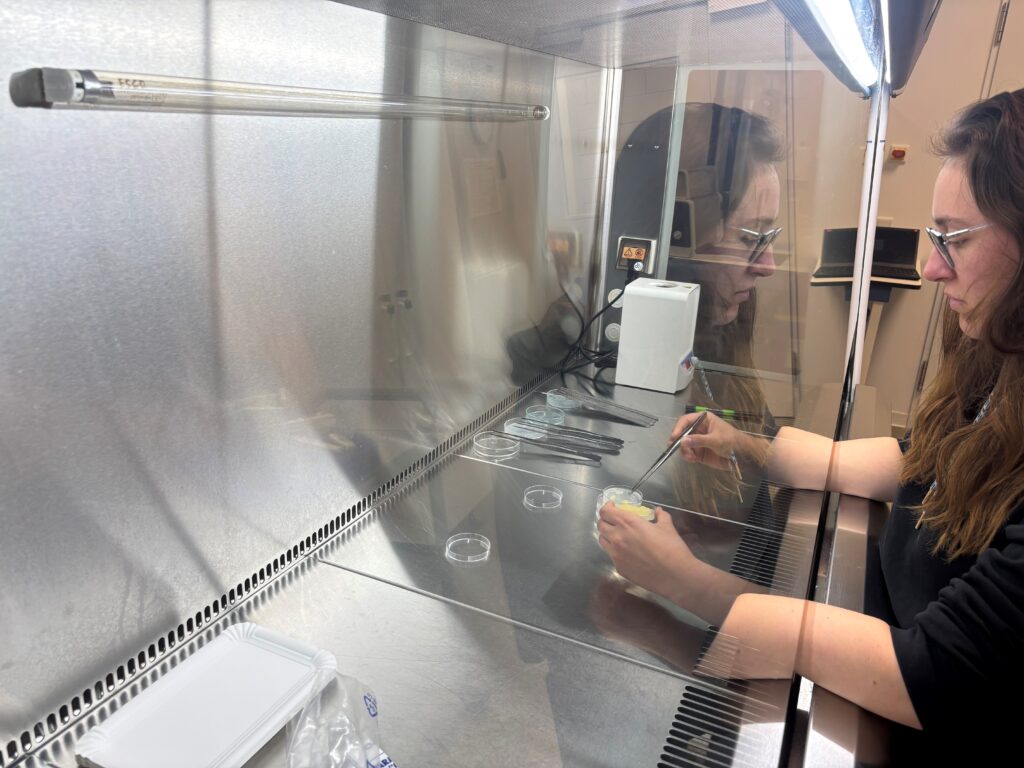
The technology Margaux is using is based on the establishment of dedifferentiated cells – cells that have lost their committed fate and that are capable of dividing at high rate. This approach will enable the cultivation of C. sativa cell cultures in bioreactors that can reach up to pilot scales.
The technology Margaux is using is based on the establishment of dedifferentiated cells – cells that have lost their committed fate and that are capable of dividing at high rate. This approach will enable the cultivation of C. sativa cell cultures in bioreactors that can reach up to pilot scales.
“I am interested in Cannabis sativa because it is a multi-purpose plant providing not only lignocellulosic biomass but also bioactives of relevance for cosmetics, nutraceutics and pharma. Establishing Cannabis sativa cell factories will thus benefit several industries.”
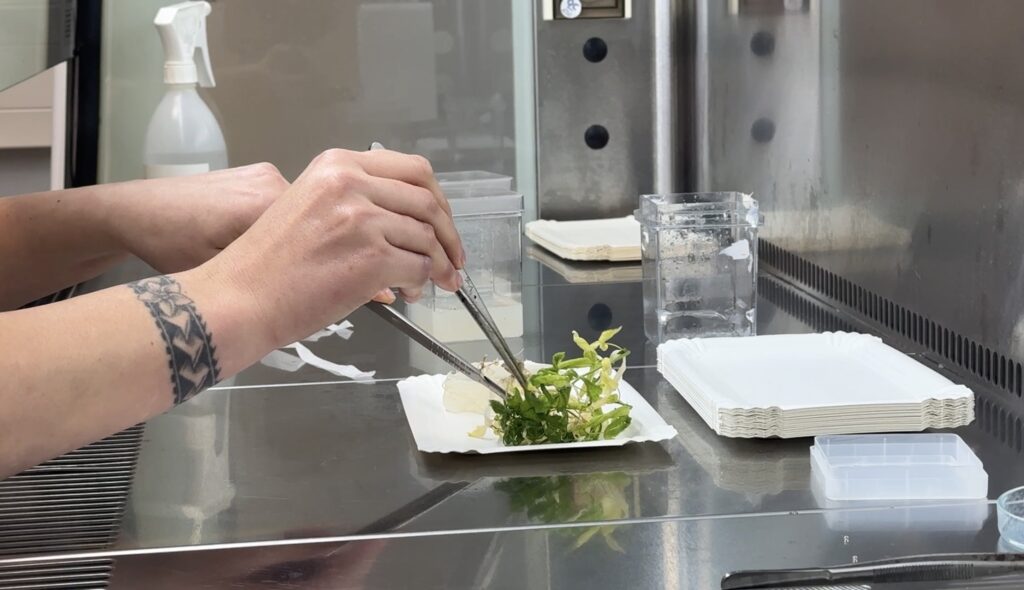
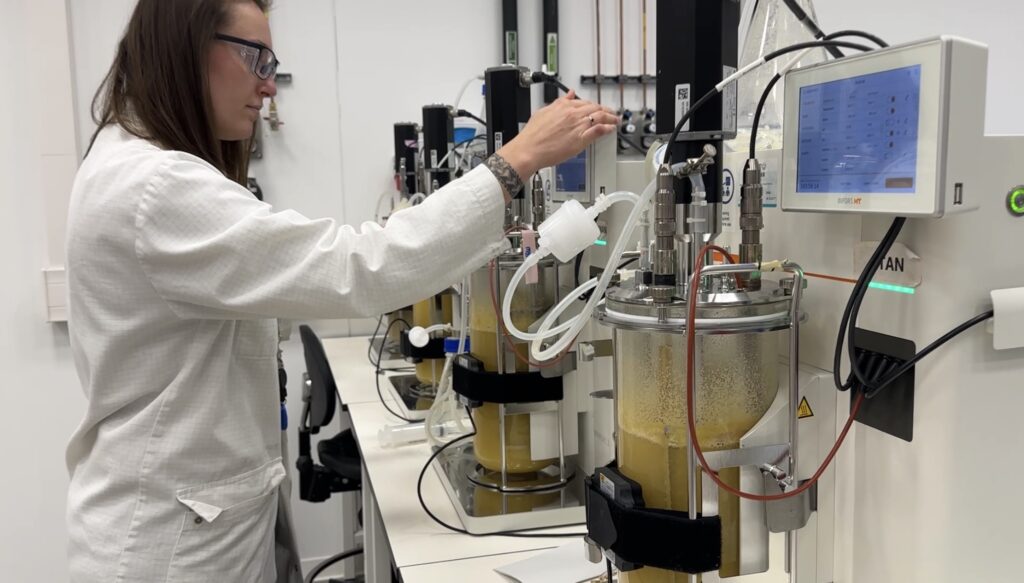
“If I consider the aspects related to my PhD work, the main challenges I can mention concerning the cultivation of Cannabis sativa dedifferentiated cells is the establishment of calli that are friable – meaning that they can disaggregate easily in liquid medium under agitation resulting in fine suspensions – as well as ensuring batch-to-batch consistency, where cultures prepared using the same protocol behave in the same way in terms of biomass and metabolite production. This last aspect requires upstream optimisation whereby different media and culture conditions are studied and compared.”
A further challenge is “genetic drifting”: calli are maintained through repeated subculturing, therefore they may undergo spontaneous genetic changes over time. This can mean changes in cell behaviour or phytochemical profile.
“Cryopreservation is an additional challenge: it is essential for long-term storage but presents intrinsic difficulties that are determined on an empiric and trial-and-error basis. Last but not least, scaling up plant cell cultures from laboratory-optimized conditions to bioreactors of higher volume poses challenges. Cells that grow well in small volumes may not adapt easily to larger vessels due to issues like shear stress, oxygen transfer, and nutrient distribution, making process optimization essential and time-consuming for successful scale-up.”
Margaux explains that in order to boost the production of valuable compounds in Cannabis sativa, it is imperative for scientists to make the growth of plant cells more efficient, reproducible and stable.
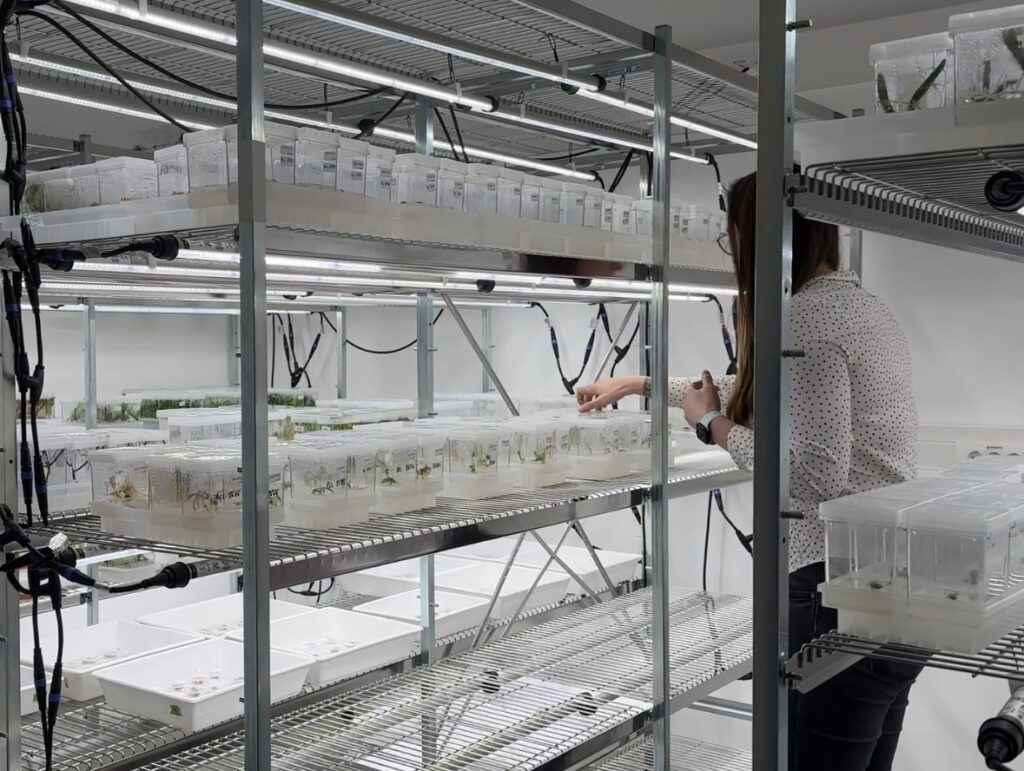
“This involves finding better ways to boost the production of added-value compounds like cannabinoids and flavonoids, using the right hormonal balance, micro/macronutrients, vitamins, as well as elicitors – for example chemical/physical factors stimulating or activating the production of secondary metabolites, typically as part of a defence response. A clearer understanding of how genes control this process can help make the system more reliable and efficient, and pave the way to synthetic biology approaches. ”Margaux Thiry PhD researcher in plant biotechology at the Luxembourg Institute of Science & Technology (LIST)
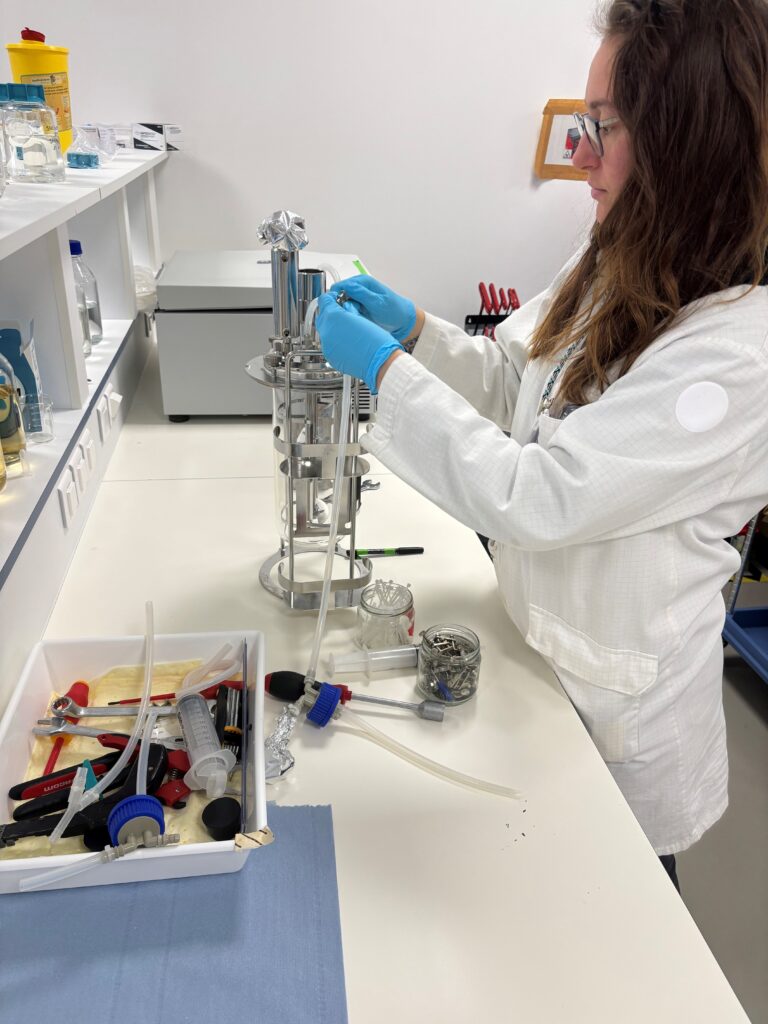
In her research, Margaux started by screening different Cannabis sativa genotypes, including a commercial type, for their ability to produce interesting molecules. By studying different genotypes, she was able to explore the variety of natural compounds they produce and subsequently select the most interesting. She then focused on the chosen genotype to establish cell suspension cultures and optimise the bioprocess in bioreactors.
“Thanks to the screening, I could identify, together with the researchers working in the group and expert in metabolomics, the phytochemical profile characterizing 9 different genotypes of C. sativa. I am currently working with the established cell cultures of the most interesting genotype to optimize its cultivation in bioreactor and boost the production of secondary metabolites.”
Margaux Thiry is a PhD student in plant biotechnology in the Plant Molecular Farming group at the Luxembourg Institute of Science and Technology (LIST). Supervisors: Dr Gea Guerriero and Prof. Stanley Lutts. Group leader: Dr Jenny Renaut.
MORE ABOUT MARGAUX THIRY
Describing her research in one sentence
“Understanding the different phytochemicals profiles of different Cannabis sativa genotypes and optimize high added molecules production in cell suspension cultures.”
On her scientific journey
“Although originally trained in microbiology and immunology, I have always been fascinated by plants because of their incredible adaptability, their resilience, and the way humans have relied on them for practical uses since ancient times. After my MSc, I worked as a laboratory technical in the Plant Molecular Farming group of LIST for ca. 1 year. This experience allowed me to apply molecular, technical and analytical skills in a new context, revealing strong interdisciplinary connections. I enjoyed this very much and these experiences gave me the possibility to pursue my PhD thesis in the same field and research group.”
What drives her as a scientist
“What drives me in research is the excitement of uncovering solutions to biological questions and contributing to innovation. I am driven by the creativity and curiosity that science inspires, the freedom to explore, to make hypotheses, and prove them in the laboratory.”
Where she sees herself in 5 years
“In five years, I would like to find a position that allows me to contribute to cutting-edge research in plant biotechnology, with a specialization in the metabolic engineering of plants for the production of high-value molecules for industries.”
Related highlights
Spotlight on Young Researchers: Making seawater drinkable
Water covers most of our planet, but only about 3% of it is drinkable and hard to reach for many…
Read more
Spotlight on Young Researchers: Smarter choices for complex systems
Complex systems are part of our everyday lives: smart cars, satellites, medical devices – but if they fail it can…
Read more
Spotlight on Young Researchers: Modelling Forest survival in a changing climate
Forests are dynamic ecosystems – they are used to change but it takes time to adapt. Climate change means drastic…
Read more
Spotlight on Young Researchers: Ensuring sustainable water use for Luxembourg
In Luxembourg, nearly one tenth of water consumption happens in agriculture. Changing rainfall patterns and rising irrigation needs during summer…
Read more
Spotlight on Young Researchers – Revisited: From researcher to project manager
When Xianqing Mao was featured in Spotlight on Young Researchers in 2017, she had completed her medical degree and was…
Read more
Spotlight on Young Researchers: Giving robots a more human touch
The use of robots is rising, both in industry and in homes. This is made possible by scientists leveraging artificial…
Read more