BACK TO RESEARCH WITH IMPACT: FNR HIGHLIGHTS
When Xianqing Mao was featured in Spotlight on Young Researchers in 2017, she had completed her medical degree and was working as a biomedical researcher at the Luxembourg Institute of Health (LIH). Fast forward to 2026, Xianqing remains in research as a project manager in medical education at the University of Luxembourg. We caught up with Xianqing’s journey, which includes becoming a mother and utilising her medical background to help shape medical education.
What made you decide to follow a different direction?
“I remain active in research, though not as a researcher. For family reasons, I chose a different career path in 2017 following the birth of my daughter. Since 2020, I have greatly enjoyed my current role as Project Manager in medical education at the University of Luxembourg.
“This challenging position has allowed me to contribute to the development of educational programmes in the medical field while also facilitating and coordinating educational research projects within the groups in collaboration with internal and external academic partners.”
Are you able to apply aspects you learned during your time as a researcher in your current work?
“The quality and capacity I developed as a researcher in my previous career have shaped my resilience, resistance and adaptability, which are essential for my current role.”
Where has your career path taken you since 2017? Is it what you expected, or did it take a different path?
“All I always expect is to have a good work-life balance. I am happy and always motivated to contribute the best of myself to the digital transformation required by our patients and clinic communities. In one way or another, I am fully dedicated to what I do and compliant with the best practice.”
“Since 2017, I have experienced several paths, and it is hard to say that’s what I expected. We adapt the course of our lives based on the resources and circumstances available to us, striving to become the best version of ourselves. I firmly believe that success is a complex concept, and everyone has their own unique path and definition of what it means. ”Xianqing Mao
What is the focus of your work now?
“My current focus is on developing educational programs with quality in the medical field while facilitating and coordinating educational research projects within the specialisation groups (known as DES in the Medicine Team) via the link, in collaboration with both internal and external academic partners.”
“Since joining the University in 2020, I have contributed to programs in medicine, nursing, and other health professions at both bachelor and specialization levels. In short, I am actively engaged wherever the University requires my expertise, leveraging both my medical knowledge and research background.”
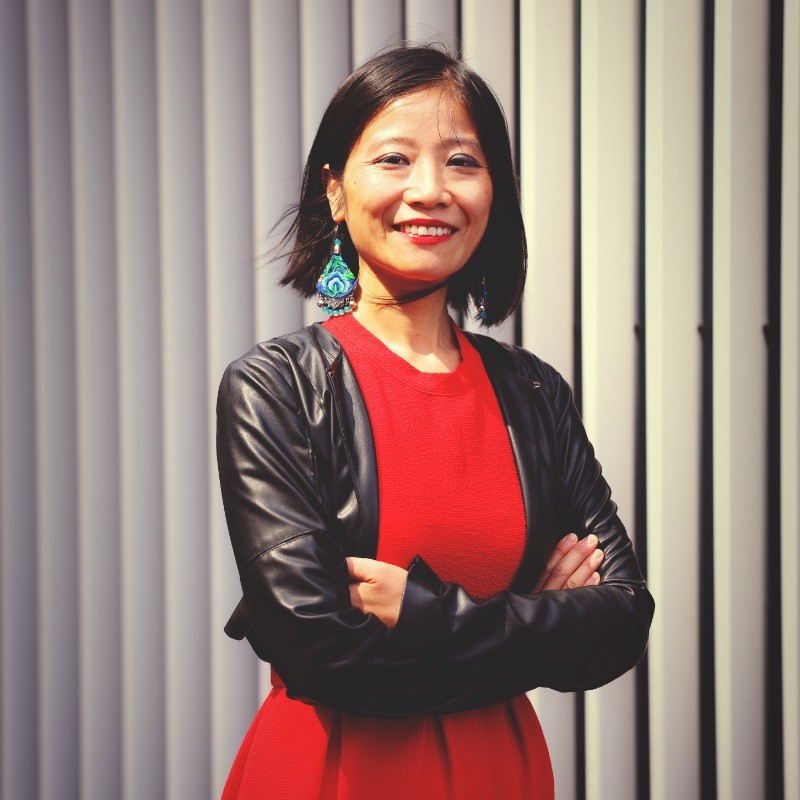
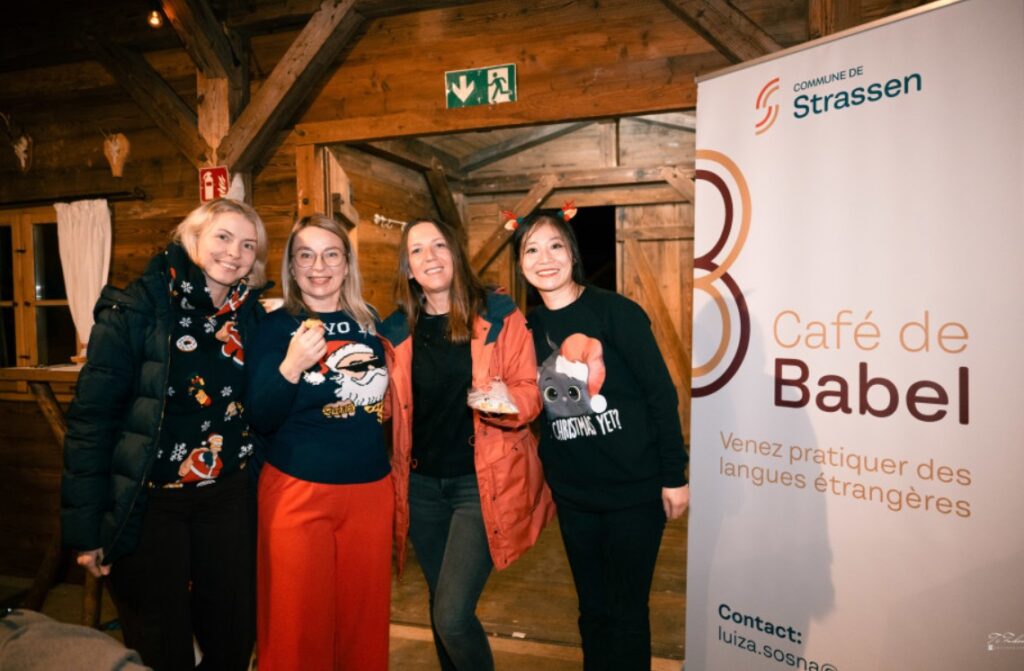
– Xianqing Mao (right)
Is there any advice you would like to give early-career researchers, or yourself when you started your research career, if you could go back in time?
“I encourage young researchers to believe in themselves. Whatever you choose to do, if it is a place where your expertise is valued, then you are in the right place. There is no single standard path or formula to follow; every path can lead to success.”
Do you see yourself staying in your current career in the next 5 years?
“I choose to continue working and growing for the benefit of patients and the University team. Wherever I am and whatever I do, I strive to give my best both as a mother, as a citizen and as a team player in all projects that I am involved in. That, to me, is what truly matters. ”Xianqing Mao
Xianqing Mao comes from a family of professors and doctors and thus has always had a natural interest in science. The Chinese national completed a medical degree, but felt she still had unanswered questions, so she decided to go abroad and took a leap into biomedical research. After stays in France, the UK, the United States and Belgium, Xianqing is now transitioning from junior to senior researcher at the Luxembourg Institute of Health, where she has already been involved in several projects investigating cancer progression.
“For a successful career in research, three things are essential for me: firstly, to be competent in my field; secondly, to be able to raise the awareness of people around me on health issues; finally, to be a social person, open-minded, communicative and with a strong team spirit”, Xianqing Mao says.
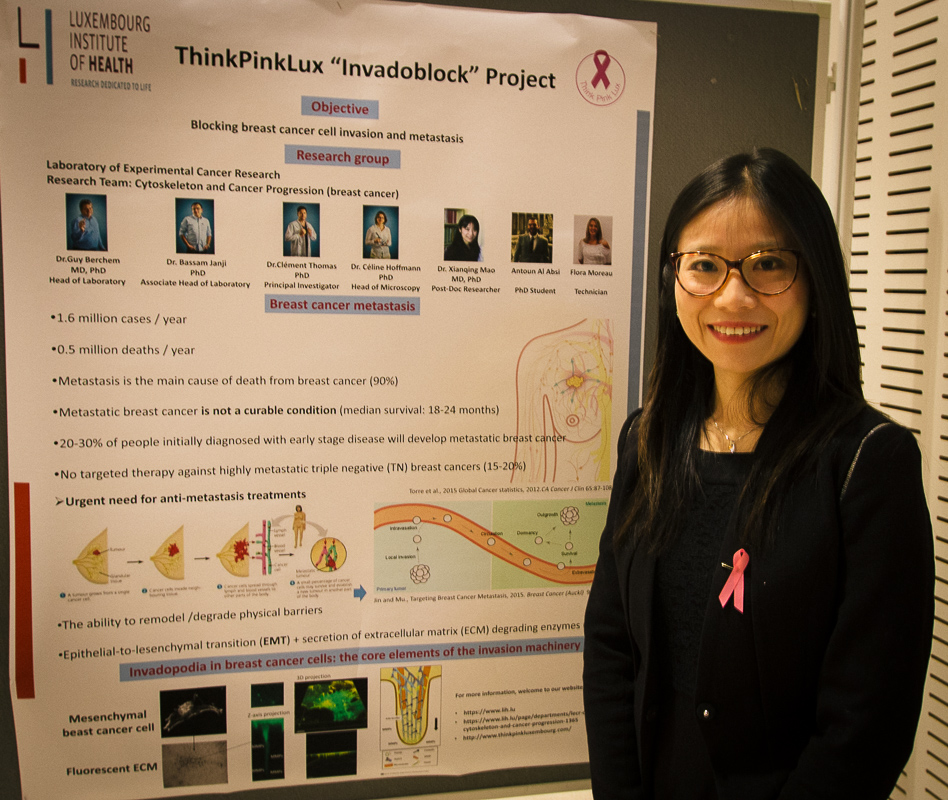
Since arriving in Luxembourg in 2013, she has been working in the ‘Cytoskeleton and Cancer Progression’ research group at the LIH. Xianqing explains that her group is interested in metastasis – the process of cancer cells spreading to other parts of the body, and the main cause of death from cancer.
“Cancer cells progressively evolve to become more and more invasive and be able to escape from the immune surveillance system. Both tumour cell invasion and immune resistance involve actin cytoskeletal changes. My research mainly focuses on actin regulatory proteins and related signalling pathways driving tumour cell invasion and immune evasion, with the goal to identify new prognostic markers and therapeutic targets.”, Xianqing explains.
A scientific cocktail
Xianqing is a postdoctoral researcher – a transition period from junior to senior researcher. How is her every-day routine changing as she progresses in her career?
“My typical work day sounds like a tasteful scientific cocktail”, Xianqing says and adds:
“Generally, I spend about 50% of my time working at the bench, setting up and conducting biological experiments. About another 50% are spent on project management and coordination: designing experiments, writing experimental procedures and analysing data. I also review experimental designs, experimental procedures, results and data analyses generated by junior team members, assist with writing journal articles and abstracts, and present my project results at scientific conferences.
“I am progressively given more and more responsibilities within the team. I now assist the team leader with grant proposal writing, make recommendations for new equipment purchases, hold laboratory meetings, participate in the hiring of new group members and establish collaborations.”
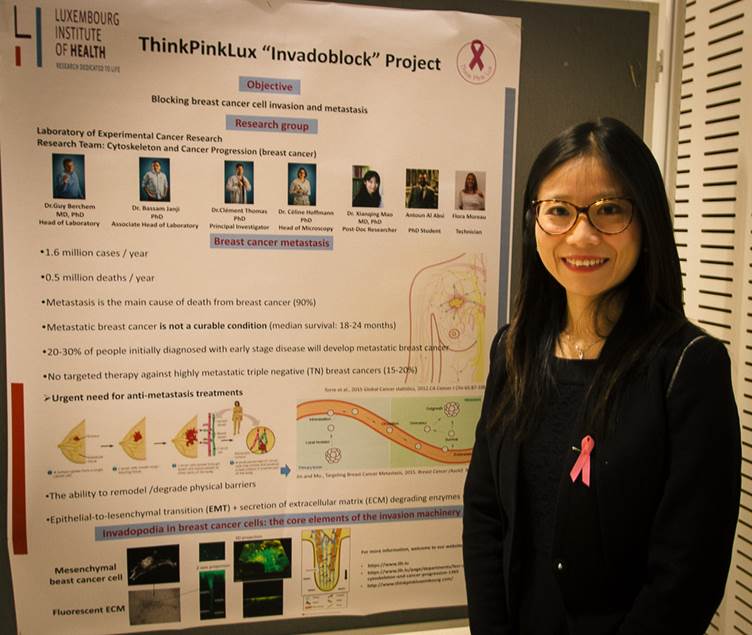

Xianqing stems from a family with an abundance of professors and medical doctors. It is no surprise that she was almost born with an interest in science – Xianqing explains that early on she was particularly interested in biomedicine and the function of cells within an organism.
It was during her medical studies that Xianqing developed an interest in experimental cancer research. She embarked on a PhD at the University of Lorraine in Nancy in France, where she worked on a project – later published in the journal Oncogene – in which it was discovered that a particular enzyme has important clinical value as a prognostic marker in a subtype of breast cancer.
With all the countries Xianqing has already worked in – how did she end up in Luxembourg and how is she thriving?
“During this 4-year experience [of my PhD,]I became highly passionate about research. I realized that my training requires far more breadth if I want to establish a successful research career. I continued travelling, learning and working, and finally arrived in Luxembourg”.
Since she arrived in the Grand Duchy in 2013, Xianqing has already been involved in 3 research projects (2 supported by Fondation Cancer and 1 supported by Think Pink Lux), and is about to embark on the FNR CORE project METASTALIM. In 2015, she had the opportunity to be a committee member of the European Health Parliament in Brussels, a hugely enriching experience:
“I met more than 50 young professionals from all across Europe. During 6 months we worked together intensively to deliver high-level policy-oriented recommendations that shall positively influence and change the future of healthcare in Europe. This work experience really broadened my horizon. It made me “think big” and I felt proud to act as a European citizen for public healthcare.”
“Research environment in Luxembourg is more attractive than in other countries”
We ask Xianqing what she thinks about the potential of Luxembourg’s research environment, and whether she could see herself sticking around for a bit longer in the Grand Duchy:
“I have travelled a lot during the early stages of my academic career (China-France-Scotland-England-United States-Belgium), however, I feel that Luxembourg is an attractive place for me to make a longer stop and develop my career,” Xianqing says and adds:
“I think that the research environment in Luxembourg is more attractive than in other countries owing to the government’s efforts to support and develop the sector of research and innovation. I believe that Luxembourg has a lot of potential for researchers to develop themselves and for long-term career evolution.”
Published 10 August 2017
Related highlights
Spotlight on Young Researchers – Revisited: From Luxembourg, to Cambridge, France, and an ERC grant
“Would matter be perfect, it would be boring” says Guillaume Nataf, who has an oozing passion for physics and teaching…
Read more
Spotlight on Young Researchers – revisited 5 years later: A post-PhD life in finance
When Eric Finn Schaanning was featured in Spotlight on Young Researchers in 2017, he had just defended his AFR PhD…
Read more
Spotlight on Young Researchers – revisited 5 years later: From drones to space robotics
When we wrote about Miguel Olivares Mendez in the 2017 edition of Spotlight on Young Researchers, the researcher was working…
Read more
Spotlight on Young Researchers – revisited 5 years later: From Luxembourg to Australia
When we wrote about Chetan Arora in the 2017 edition of Spotlight on Young Researchers, he was a Postdoc working…
Read more