BACK TO RESEARCH WITH IMPACT: FNR HIGHLIGHTS
Body dissatisfaction affects over half of the Western population, driving the development of eating disorders, a mental illness with high mortality rates. Researchers are combining psychology and cutting-edge technology to tackle these issues.
Having a negative perception of one’s body is often associated with women’s view of their appearance; however, while 66% of women in Western societies report body dissatisfaction, 52% of men are similarly affected. This can lead to serious mental illness, and high mortality rates due to limited treatment success.
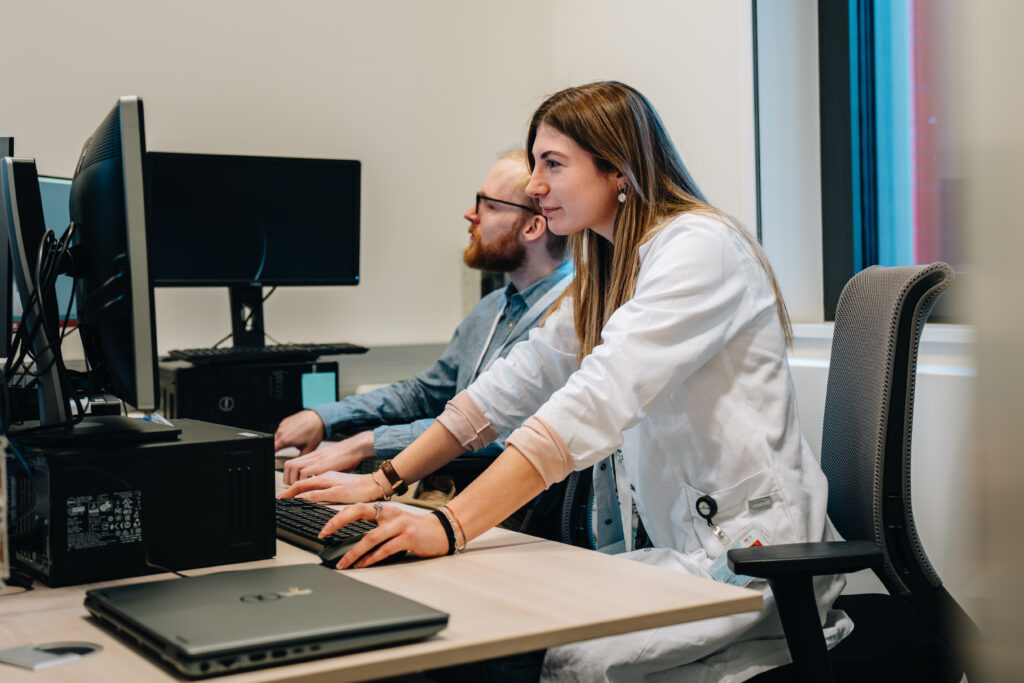
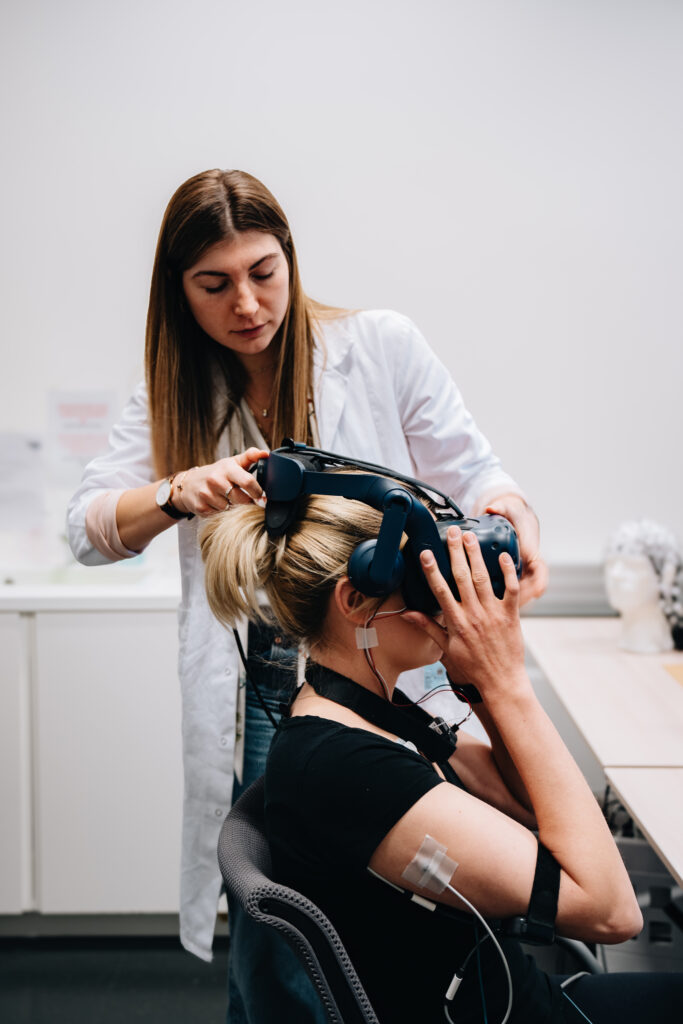
“Research has significantly advanced our understanding of how distorted body image and sensory perception contribute to eating disorders. Over the past decade, virtual reality (VR) has emerged as a powerful tool in mental health, used to simulate challenging real-life situations safely and effectively. Early studies show that embodying avatars in VR can shift how people perceive their bodies—reducing distortion and dissatisfaction,” explain researchers Fiammetta Zanetti and Johannes Günter Herforth from the VRBIAS team at the University of Luxembourg, which focuses on the development and evaluation of a Virtual Reality Body Image Intervention and Assessment Suite (VRBIAS).
Breakthroughs such as these have paved the way for new treatments with a more interactive, engaging approach that hold promise for being more effective than traditional methods.
“Our work builds directly on these innovations to push treatment and prevention efforts even further. We are developing an innovative virtual reality tool that helps people better understand and reconnect with their bodies. By combining psychology with cutting-edge technology, we aim to offer immersive, accessible, and science-based solutions to address this growing societal problem and improve mental health outcomes. ”
Fiammetta Zanetti is a neuroscientist working on designing and testing a virtual reality platform aimed at improving how we assess and treat eating disorders, while Johannes Günter Herforth is a computer scientist working on researching tools and techniques to enhance the user’s presence and identification with themselves in virtual reality-based psychotherapeutic applications.
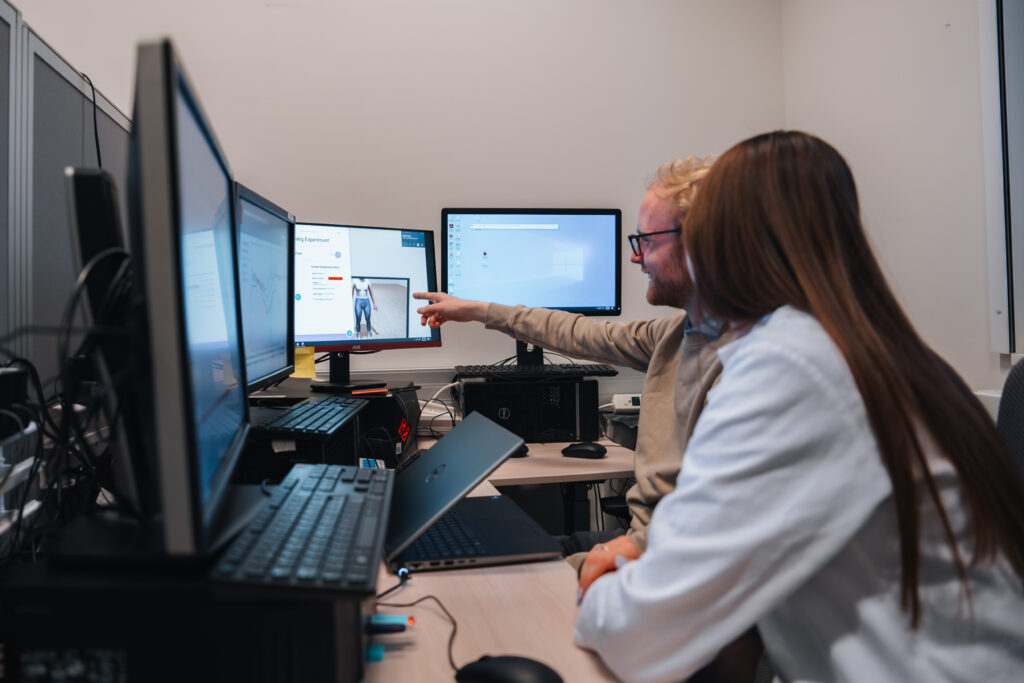
The duo explains that the biggest challenge is translating promising lab-based interventions into real-world clinical practice and that despite early results showing promise, large-scale studies are needed to confirm long-term effects, as well as to determine how these tools can be integrated into routine treatment.
And additional hurdle is the high cost of VR technology, combined with a lack of standardised tools across studies, and the need for interdisciplinary collaboration.
“We’re also still uncovering the precise neurobiological mechanisms behind body image disturbance, which is essential for designing truly effective, targeted interventions that work for diverse individuals and clinical settings.”
The team’ goal is to develop the platform by systematically studying key components of embodiment, central to the intervention’s effectiveness.
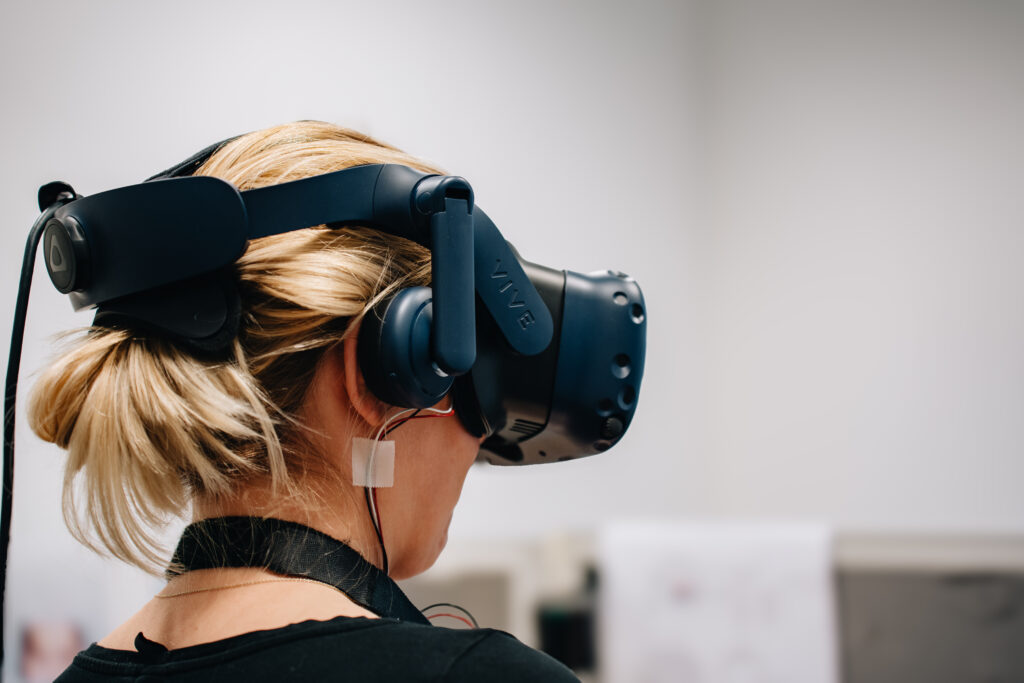
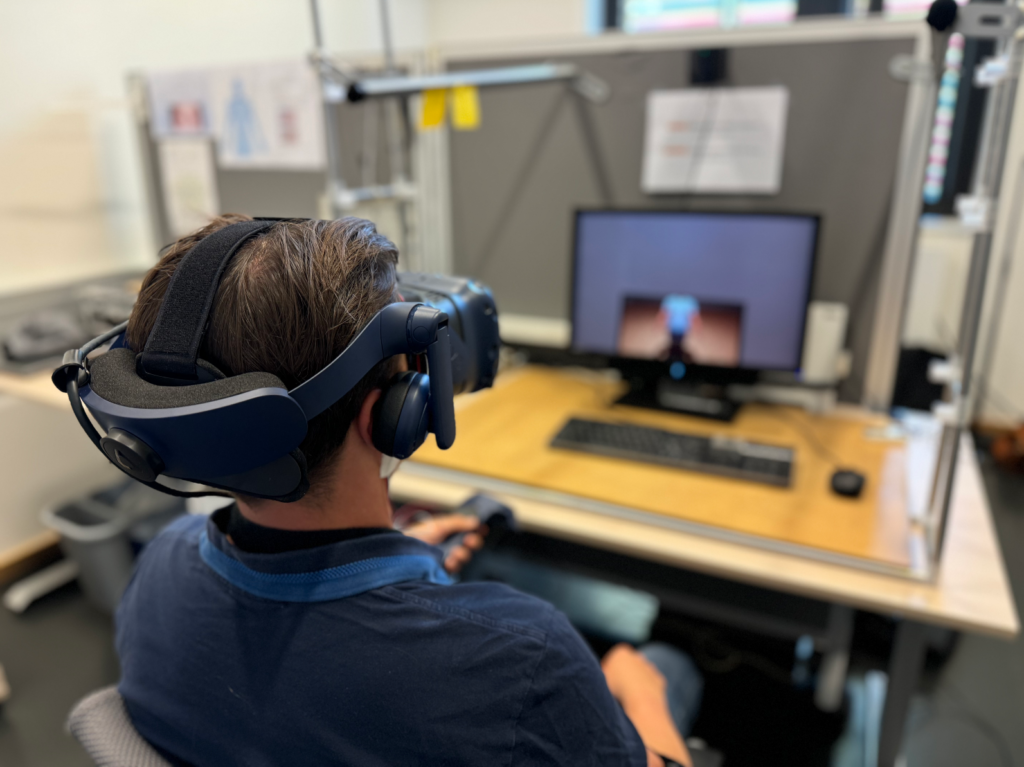
“The first study focused on how avatar lifelikeness influences user engagement. Findings from that phase guided the design of a technically improved second study.”
The VRBIAS team will soon start to collect data for their next experiment and are looking for participants.
Fiammetta Zanetti MSc and Johannes Günter Herforth MSc are PhD researchers in the VRBIAS team at the University of Luxembourg, led by PIs Dr. Annika Lutz and Dr. Jean Botev. Learn more about their research below.
Fiammetta Zanetti, Neuroscientist
What is your research focus?
“My research contributes to developing and testing a virtual reality platform that helps us understand how people perceive their bodies and how that perception can be changed. By experimenting with different body representations and perspectives, we’re collecting detailed data on how users respond, emotionally, physically, and behaviourally. This helps refine psychological theories around body image disturbance and eating disorders. At the same time, we’re building a tool that could be used in therapy, filling a gap in current treatments by directly targeting body image distortion in a new and immersive way.”
What drives you as a scientist and where do you see yourself in 5 years?
“What drives me is the belief that science can spark real change. Mental health is still surrounded by stigma, and no one should suffer in silence. Being part of research that helps reduce that suffering is a privilege. In five years, I see myself in academia or industry—I don’t give myself limits. What matters most is continuing to do meaningful work and raise awareness around mental health. I love that science never stands still — it constantly feeds my curiosity. Every day brings new questions, new ideas, and the chance to work with inspiring people. Research isn’t just about answers; it’s about growing, connecting, and helping shape a better future for everyone.”
On her research, peer to peer
“VRBIAS develops and evaluates a virtual reality-based platform to assess and treat body image disturbance, grounded in psychological and neurobiological models of eating disorders. It combines behavioural, psychophysiological, and neurocognitive measures, including heartbeat-evoked potentials and multisensory illusions to induce embodiment. We examine variables like avatar realism, viewing perspective, and agency to improve intervention efficacy. The platform enables dimensional assessment of body image distortion and dissatisfaction, both in VR and real life. By integrating cutting-edge technology with theory-driven design, VRBIAS aims to support research, clinical diagnostics, and intervention for disorders such as anorexia nervosa and body dysmorphic disorder.”
Johannes Günter Herford
What is the focus of your research?
“My research addresses a variety of complex challenges, all demanding great care due to the inherent privacy considerations of the human body. Our main goal is to recreate the human experience inside of virtual environments, providing a sensation of identifying with one’s own avatar representation and to access body image questions. To create realistic representations, a substantial amount of research focuses on creating techniques to maximize realism, without taking other factors of accessibility into account.”
“In contrast, we ask to what extent realism is important and focus on comparable effects while taking privacy, space usage, cost and scalability into account to account for inclusivity and accessibility.”
What drives you as the scientist and where do you see yourself in 5 years?
“If I have seen further, it is by standing on the shoulders of giants.” Isaac Newton. What drives me most is the knowledge that my work is public and applicable to many areas. No matter what the result of your experiments are, you are providing to a public pool of knowledge where anyone can learn from your experience, improve it and pass new knowledge on. I don’t see myself in any other environment in 5 years.”
“What I love about science is the collaborative aspect you not only have with your team, but also the wider scientific community altogether. You get to pose unique questions, develop methods and then discuss your work in this common framework. With the ideals of academic freedom and openness, your work might even help solve other problems you never knew existed.”
On his research, peer to peer
“Since we are focusing on psychotherapeutic applications, we are pushed towards really thinking about the interdisciplinary focus between Computer Science and Psychology. Technical feasibility alone isn’t enough when research involves real people and sensitive context. Therefore, we work on avatar creation techniques which provide phenotypic adjustment methods (changing parameters such as height, shoulder width, hip width, etc.) while focusing less on scanning the body itself. Lifelike avatar bodies may even have adverse effects akin to the uncanny valley. Therefore, we must get the balance of realism and the overall feeling of control of a virtual avatar just right.”
Related highlights
Spotlight on Young Researchers: Lab-grown Cannabis Sativa for valuable compounds
Cannabis sativa is of great interest to scientists, with uses in areas including cosmetics, nutraceutics and pharma. Researchers are working…
Read more
Spotlight on Young Researchers: Making seawater drinkable
Water covers most of our planet, but only about 3% of it is drinkable and hard to reach for many…
Read more
Spotlight on Young Researchers: Smarter choices for complex systems
Complex systems are part of our everyday lives: smart cars, satellites, medical devices – but if they fail it can…
Read more
Spotlight on Young Researchers: Modelling Forest survival in a changing climate
Forests are dynamic ecosystems – they are used to change but it takes time to adapt. Climate change means drastic…
Read more
Spotlight on Young Researchers: Ensuring sustainable water use for Luxembourg
In Luxembourg, nearly one tenth of water consumption happens in agriculture. Changing rainfall patterns and rising irrigation needs during summer…
Read more
Spotlight on Young Researchers – Revisited: From researcher to project manager
When Xianqing Mao was featured in Spotlight on Young Researchers in 2017, she had completed her medical degree and was…
Read more