BACK TO RESEARCH WITH IMPACT: FNR HIGHLIGHTS
FNR ATTRACT Fellow and epidemiologist Dr Sophie Pilleron has devoted her professional life to vulnerable populations. After various positions and countries, she came to Luxembourg to take on a leadership role.
Dr Sophie Pilleron had neither consciously planned a life in Luxembourg nor a leadership position. Her career did not follow a traditional straight line but developed through diverse stages and new topics within epidemiology. In an interview with science.lu, Sophie Pilleron explains how multifaceted the field is and what motivates her.
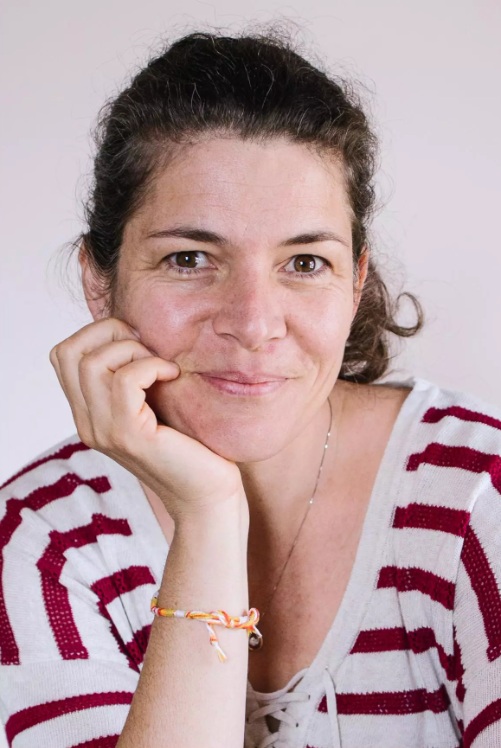
How would you describe yourself?
“I am an epidemiologist specialising in ageing and cancer, originally from Dijon in France. I completed my PhD in France in 2014 and, since 2023, I have been leading a team of ten young researchers at the Luxembourg Institute of Health (LIH), thanks to an ATTRACT fellowship from the Luxembourg National Research Fund (FNR). I am also a board member of the International Society of Geriatric Oncology (SIOG), an alumna of the University of Oxford, a member of the editorial board of the Journal of Geriatric Oncology, a strong advocate for women in science, a mentor at the University of Luxembourg and, last but not least, the mother of two daughters. In short: I am many things!”
Why did you choose a career in research? Was it a childhood dream?
“Not at all. I was interested in science subjects at school, especially biology and mathematics. I originally wanted to study medicine but did not pass the entrance examination. However, I was able to continue directly into the second year of a biology degree, specialising in cell and molecular biology. Later on, I focused on nutrition and then completed a Master’s degree in Public Health and Developing Countries at Paris 6 University. That was where I fell in love with epidemiology.”
Was there a decisive moment?
“Yes – an eight-month internship in West Africa. As a student, I was given the task of leading a study on the causes of growth retardation in unborn children of women in rural Burkina Faso. I did everything myself from A to Z – developed the questionnaires, coordinated the interviewers and analysed the responses. I was 23 years old, travelling by moped from village to village to visit mothers who had just given birth and asking them questions. It was an absolutely extraordinary experience for a young European woman.”
How did you get to where you are today? What still drives you?
“My career has not been linear. I have worked as an epidemiologist in various types of institutions and organisations. After my Master’s degree, I wanted to pursue a PhD. I began my doctorate at the University of Strasbourg but had to interrupt it because I was expecting my first daughter. I then completed a professional Master’s degree in epidemiology in Bordeaux, so to speak with a baby in my arms. I was a young single mother and needed to earn a living. After graduating, I worked for a regional public health observatory and then for the NGO Handicap International, evaluating diabetes projects in the Philippines and East Africa. At the age of 31, I resumed my doctoral studies, this time at the University of Limoges, focusing on cognitive disorders in Central Africa.”
“This was possible because epidemiology offers many subfields, topics and perspectives. Epidemiologists do not only work in research but also in public health authorities, NGOs and international organisations. The common thread throughout my career has always been the desire to serve vulnerable populations.”
Starting a PhD in your early thirties is quite late, isn’t it?
“Indeed. I do not come from an academic family, and it took me a long time to understand how research careers function – for example, that you need to maintain contacts and make yourself visible in order to progress. I was pregnant with my second daughter when I defended my PhD. Missions to Africa with two small children were more complicated. So I looked for postdoctoral positions in France that did not require travel. I was awarded a highly competitive fellowship for a research project on cancer in older people at the International Agency for Research on Cancer (IARC), a specialised cancer research agency of the World Health Organization (WHO). That was when I realised how little epidemiological research focuses on older populations, even though older people account for the majority of newly diagnosed cancer patients each year. During my postdoc at IARC, I met Professor Diane Sarfati and was determined to work with her. I applied for a Marie Curie Global Fellowship, one of the most competitive European research grants, and was successful. As a family, we moved to New Zealand for a year – an extraordinary experience!”
Luxembourg was probably not on your radar at that point?
“I’m afraid not. After a postdoctoral position at the University of Oxford, which took place largely online due to the pandemic, my current supervisor contacted me. We knew each other through professional exchanges on social media, and he wanted to establish a research group on cancer. I applied for the FNR ATTRACT Fellowship, which provides five years of funding, and was successful. So the whole family moved again! Today I am very happy in my position and do not regret any stage of my journey.”
What does your daily research work look like?
“Epidemiologists study the frequency, distribution and causes of diseases in populations. Our daily work is based on data analysis and statistics. You have to identify a compelling research question and then find a dataset that promises answers. The next steps are analysing, interpreting and publishing. We do not work in laboratories, and field studies like the one in Burkina Faso are rare in developed countries.”
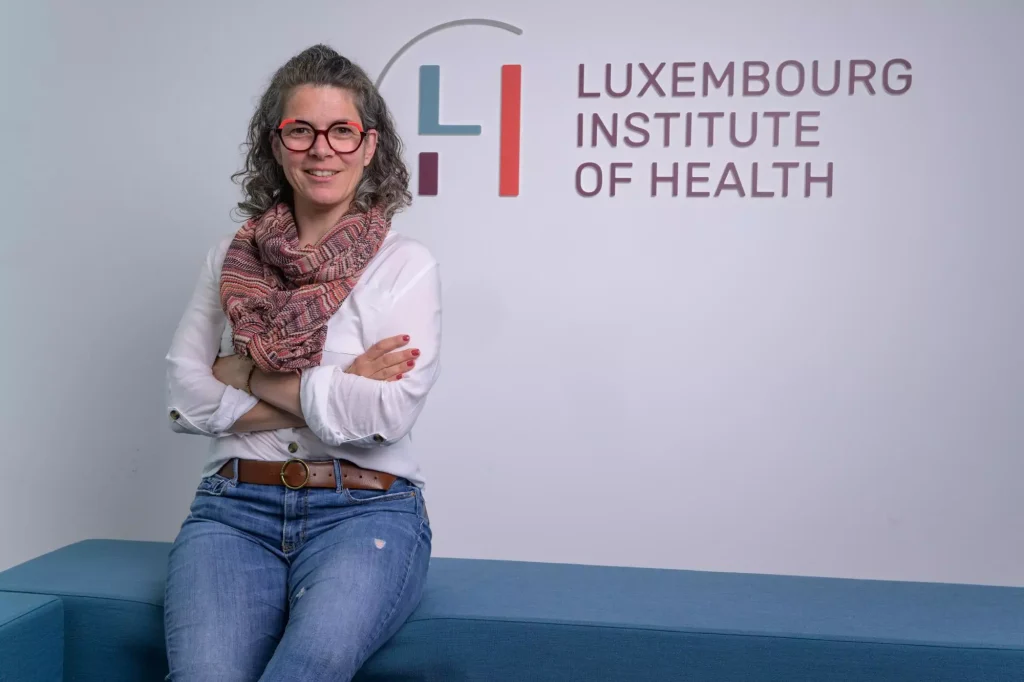
“At the LIH, I lead a multidisciplinary research group consisting of Master’s students, one PhD candidate, four postdocs and a doctor training to become a GP. All women. I spend much of my time encouraging these young scientists, supporting their research projects and guiding them. Many initially lack self-confidence. I also need to build networks in Luxembourg and, of course, carry out traditional academic duties such as peer-reviewing scientific papers. In addition, I give lectures to third-year medical students at the University of Luxembourg. ”Dr Sophie Pilleron FNR ATTRACT Fellow & Group Leader of the Ageing, Cancer and Disparities Research Unit, Luxembourg Institute of Health (LIH)
What is your team currently working on?
Sophie Pilleron: Our goal is to reduce age-related inequalities in the treatment of cancer patients. People over the age of 70 are underrepresented in clinical trials. This matters to me because I want to achieve real impact – so that older cancer patients will one day have the same opportunities as younger people to receive the best possible treatment. Given Europe’s ageing population, this is an enormously important issue for our society.
Who or what has supported you in your career?
“Sophie Pilleron: “My mother, who looked after my eldest daughter while I travelled on missions to Africa or elsewhere for several weeks at a time. And my partner. Epidemiology is a field largely dominated by women, so there was not much male competition. However, because of family responsibilities, female researchers’ careers generally take more time. My partner changed jobs several times for me and accepted moves to other countries. Not every researcher is that fortunate.”
What advice would you give to young girls interested in science?
“Find out which subject or topic you are passionate about. That is the foundation for everything. Do not be afraid to ask questions – of anyone, anywhere. Most scientific authors are delighted when a student contacts them because she has read their paper. Who knows what might come of such a connection? Do not be afraid to change your research topic if it is no longer enjoyable. Choose your PhD supervisor carefully, also on a personal level.”
“Never compare yourself to others, believe in yourself and do not listen to discouraging voices. My maths teacher once told me at school: “You will never become a scientist.” And that was simply because I had a different way of thinking. Accept failure as well – rejected grant applications, fellowships and articles are part of the process. Even if your educational background is not perfect, there are always ways forward. Anglo-Saxon countries, for example, are much more open to non-linear career paths. Be persistent, accept relocations, remain flexible and stay open to every opportunity that comes your way. ”Dr Sophie Pilleron FNR ATTRACT Fellow & Group Leader of the Ageing, Cancer and Disparities Research Unit, Luxembourg Institute of Health (LIH)