BACK TO RESEARCH WITH IMPACT: FNR HIGHLIGHTS
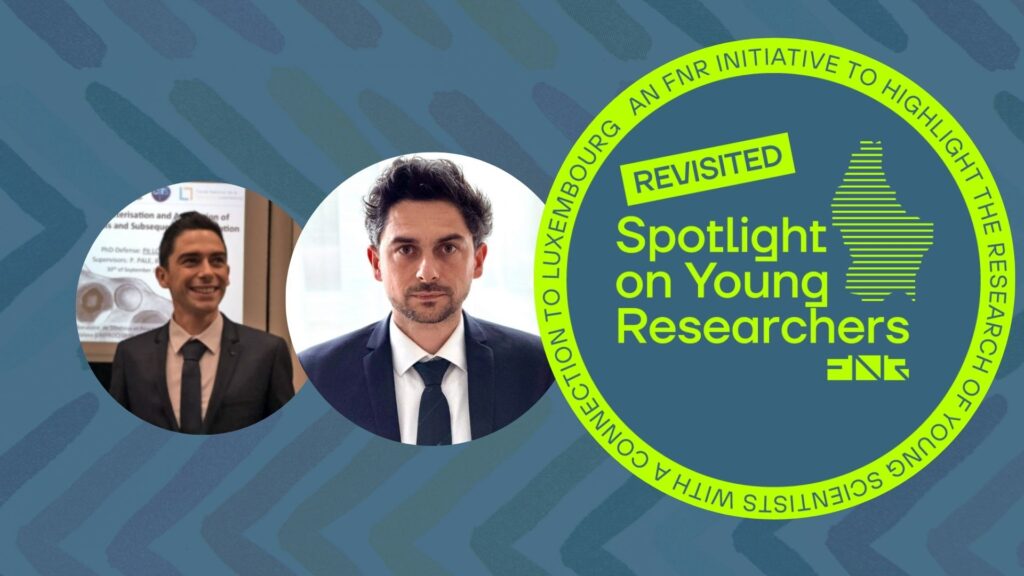
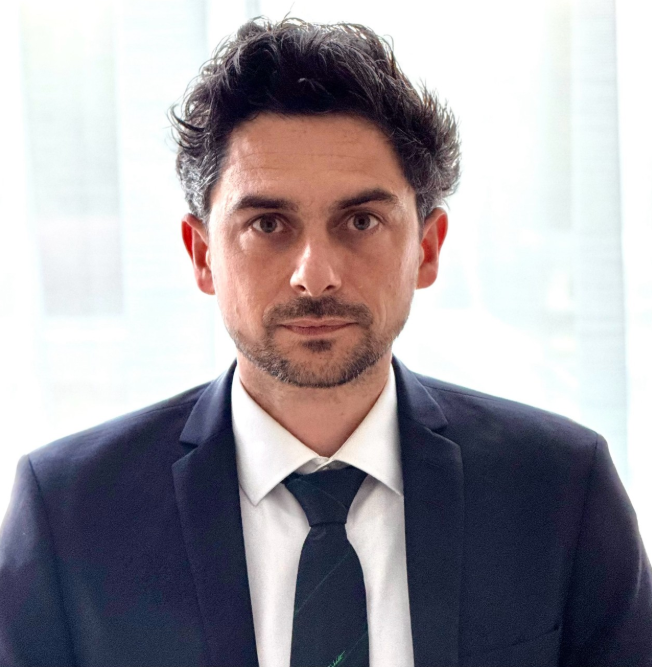
When Pit Losch was featured in Spotlight on Young Researchers in 2017, he had completed his AFR PhD at the University of Strasbourg and was working as a Postdoc at the Max Planck Institute for Coal Research, where he investigated and shaped materials for the future. We caught up with Pit, who has since returned to his native Luxembourg and is now heading the Directorate for Thermal Energy Systems & Hydrogen within the General Directorate for Energy at the Ministry of the Economy.
Are you still active in research?
“Not really. I returned to Luxembourg in November 2019 to start a career as a civil servant at the Ministry of Energy and Spatial Planning. Since this year, I am heading the Directorate for Thermal Energy Systems & Hydrogen within the General Directorate for Energy at the Ministry of the Economy.
”Although I am no longer conducting research myself, I remain in very close contact with domestic, European, and international R&D&I stakeholders. I still engage with scientific work regularly, even if I am no longer pushing the boundaries in the lab.”
What made you decide to follow a different direction?
“The decision to change career paths was multifaceted and quite different from what I said in the first 2017 interview, when I claimed I would leave research only if I lost my passion for it — which I never did.
“I realised that pursuing an excellent academic career in nanomaterials and catalysis would not have been feasible in Luxembourg at that time. I felt increasingly motivated to use my skills to help implement and deploy solutions to combat climate change. The journey from scientific discovery to market uptake is extremely long, and I wanted to contribute on the deployment side.”
“After many years of studying, conducting research, and thereby travelling across five continents, I got married in 2019, and my wife and I decided to settle permanently.”
Are you able to apply aspects you learned during your time as a researcher in your current work?
“My scientific training still helps me every day — in analytical thinking, in evidence-driven policymaking, and in collaborating with other ministries, stakeholders, experts and even still with scientists.”
Where has your career path taken you since 2017?
“In 2017, while working as a postdoctoral researcher at the Max-Planck-Institut für Kohlenforschung, I was awarded both a Fulbright Scholarship (via the U.S. Embassy in Luxembourg) and an Alexander von Humboldt Fellowship. The Fulbright grant allowed me to spend 2018 as a scientist in the Department of Chemical Engineering at Stanford University, while the Humboldt Fellowship gave me the opportunity to return to Europe and deepen my work at the Max Planck Institute in 2019.”
“Up to that point, everything unfolded exactly as I had hoped in 2017. What I did not foresee was my return to Luxembourg in November 2019.”
Your path out of academia in 2019 was not initially expected, but you found fulfilment in civil service?
“As scientists, we are often told there are two career paths: continuing in academia or joining industry. But over time, I became convinced that there must be more — and joining the civil service turned out to be a third, very rewarding alternative.”
“Since entering the public sector, I have enjoyed the diversity of challenges, the sense of purpose, and the rich interactions with other ministries at national and international level, stakeholders, industries, and researchers. It has taken my career in a direction I had not anticipated, but one that has been extremely fulfilling.”
You are now heading the Directorate for Thermal Energy Systems & Hydrogen within the General Directorate for Energy at the Ministry of the Economy. What is the focus of your work?
“At the Ministry of the Economy, my work focuses on two broad areas, one being decarbonising the heating and cooling (H&C) sector. In order to ensure a secure and competitively priced access to low-carbon heat sources, planning at both national and communal levels is crucial to unlock untapped potentials — such as industrial waste heat or, increasingly, heat from data centres.”
“We are also creating the legal and economic conditions necessary for district heating systems to expand where heat pumps are not suitable.”
“Finally, we are working to de-risk deep geothermal energy – up to roughly 2.5 km – a renewable and continuously available heat source that could supply densely populated and high-demand areas.”
“Additionally, I work on creating the framework for decarbonised molecules such as hydrogen and e-fuels. This includes ongoing work since 2021 on Luxembourg’s hydrogen strategy: stimulating the supply of hydrogen and its derivatives, encouraging existing fossil-fuel users to switch, and developing the infrastructure needed to connect supply and demand.”
“For industrial processes that are hard to electrify and cannot switch to hydrogen, carbon capture, utilisation and storage (CCUS) technologies are essential. In 2025, together with the Ministry of the Environment Climate and Biodiversity, we started creating a framework for CCUS in Luxembourg.”
“Through geothermal energy, hydrogen and CCUS,I stay regularly in touch with scientific research and the scientific community.”
Is there any advice you would give your younger self and early-career researchers?
“To my younger self, I would say: Do everything as you will. Be patient — it is going to be exciting. I would not spoil the surprises. To young scientists today, my advice is: Stay passionate and curious. If people say there are only two possible paths, consider the possibility that there may be more. Science prepares you for many directions — including some you do not yet see. ”Pit Losch
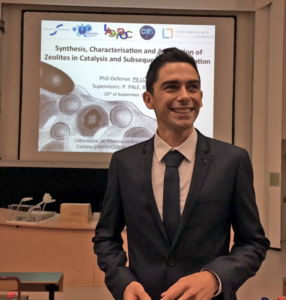
Passion and competitiveness is at the heart of being a researcher for Pit Losch, who describes life in research as a rollercoaster ride. The Luxembourg national, who completed his AFR PhD at the University of Strasbourg, is currently a Postdoc at Max Planck Institute for Coal Research, where he investigates and shapes materials for the future. We spoke to Pit about his life as a scientist.
Why did you decide to become a researcher?
“During my B.Sc. internship in biochemistry, I fell in love with this world, where passion, and an ounce of competitiveness, are key to willingly ‘survive’ long working shifts. Later experiences only confirmed this initial attraction – life in research is living on a rollercoaster, it makes you permanently discover and experience new ‘ups’, but also low ‘downs’.”
Tell us about your work, what is your research about?
“During my PhD at Strasbourg University, I had the chance to work on a variety of topics, all related to a special type of (nano-) materials.
“We designed porous (cheap) aluminosilicates, zeolites as heterogeneous catalysts. In heterogeneously catalysed chemical transformations, the purpose of using such materials is to lower the energy consumption to form a benign or valuable product B, from a hazardous or cheap product A.
“Currently, I am a Postdoctoral Researcher at the Max Planck Institute for Coal Research, where I continue to investigate and attempt to shape materials for the future.”
What is a typical day like for you as a Postdoc?
“A typical day is composed of 70% office work, such as reading and writing publications, preparing conferences, and preparing experiments etc. About 30% of my day consists of laboratory work including for example experiments and analyses, as well as irregularly supervising undergraduate or PhD students.”
You’re a Luxembourg national abroad, what do you think about how Luxembourg’s research landscape is developing?
“I am proud to be a Luxembourger, and I have always advertised my home country’s evolving R&D abroad. However, in my opinion, the research topics are still limited, and thus I had to get my higher education and first experience abroad.
“The latter restriction was in fact the best thing that could ever have happened to me: seeing the world, meeting and collaborating with people from all over the world – from Brazil to China and South-Africa to Norway – was overwhelmingly enriching.
“Obviously my long-term plan is to eventually bring all of the acquired knowledge to Luxembourg. I would like to be able to combine the benefits offered by our multicultural and multilingual country with the experience and passion I acquired abroad, in order to perform fundamental and applied research.”
Last but not least, what would you like to achieve during your career in research?
“Stay passionate! If I lose my passion, I will quit and do something else.”
“All of the scientific interactions I had the chance to get at conferences taught me that science can (and should) be combined with beauty, if science wants to be heard. Beauty is universal and eases communication. In this perspective, I was closely interacting with my brother, who has an ”artistic gene”, and who helped me to present results or ideas in different ways. This image shows an artistic view of molecules diffusing in and out of zeolites”
“This image shows an artistic view of the continuous improvement approach to obtain an optimal catalyst”
Related highlights
Spotlight on Young Researchers – revisited: “Luxembourg was never in my plans, but now I am happy that I took up the adventure”
When Eva Lagunas was featured in Spotlight on Young Researchers in 2018, she was a postdoc at SnT, working on…
Read more
Spotlight on Young Researchers – Revisited: From drones to embodied AI
When Jose Luis Sanchez Lopez was featured in Spotlight on Young Researchers in 2019, he was a postdoc in the…
Read more
Spotlight on Young Researchers – Revisited: From researcher to project manager
When Xianqing Mao was featured in Spotlight on Young Researchers in 2017, she had completed her medical degree and was…
Read more
Spotlight on Young Researchers – Revisited: From Luxembourg, to Cambridge, France, and an ERC grant
“Would matter be perfect, it would be boring” says Guillaume Nataf, who has an oozing passion for physics and teaching…
Read more
Spotlight on Young Researchers – revisited 5 years later: A post-PhD life in finance
When Eric Finn Schaanning was featured in Spotlight on Young Researchers in 2017, he had just defended his AFR PhD…
Read more
Spotlight on Young Researchers – revisited 5 years later: From drones to space robotics
When we wrote about Miguel Olivares Mendez in the 2017 edition of Spotlight on Young Researchers, the researcher was working…
Read more